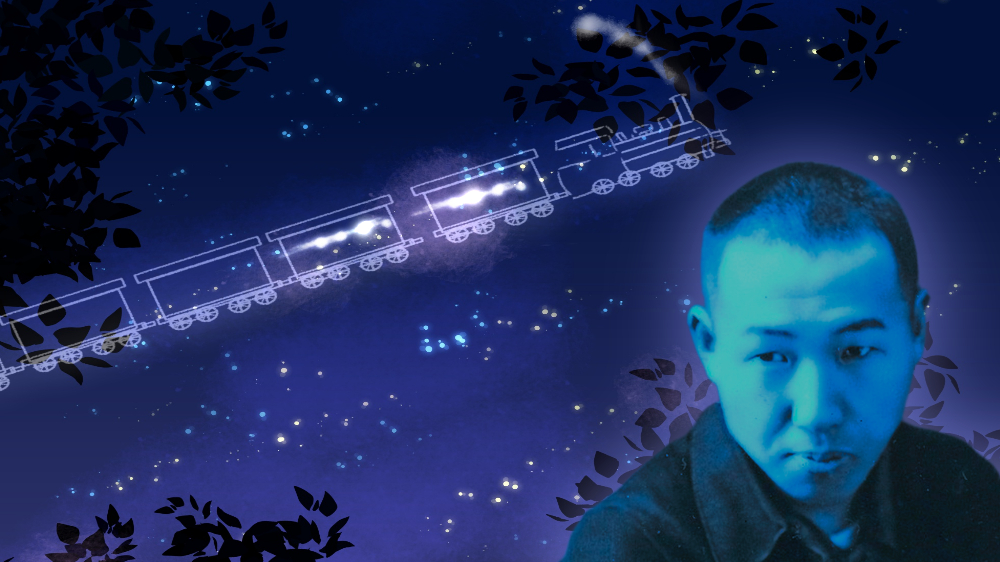
This time, I’d like to introduce a well-known figure in Japan — the beloved poet and storyteller Kenji Miyazawa, best known for his iconic poem Be Not Defeated by the Rain (Ame ni mo Makezu). In Japan, his works are often featured in school textbooks, so most Japanese people grow up knowing his name.
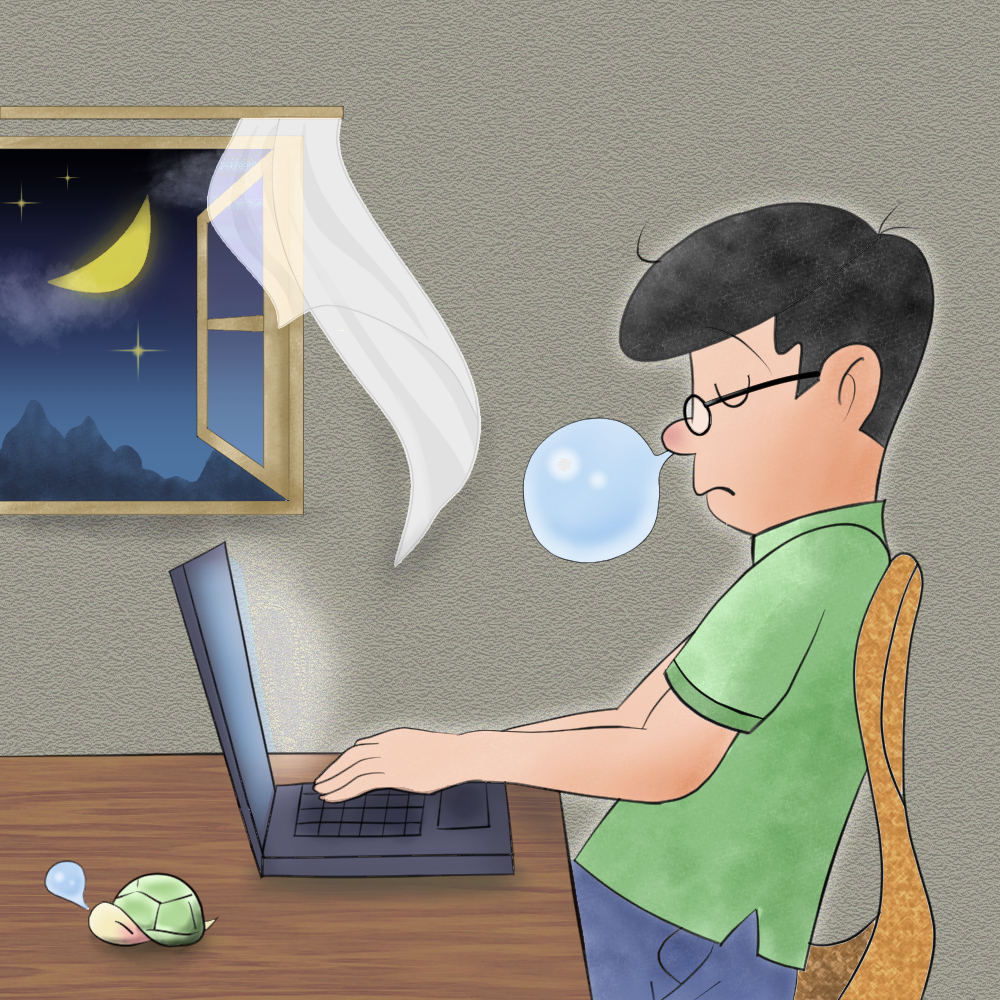
As for his personality, I don’t think he would have thought of himself as an introvert — the concept didn’t even exist back then. But from what we can gather about his life and writing, I believe there’s a good chance he was. Seeing him through the lens of introversion gives us a new way to appreciate his character — I hope something here resonates with you.
About Him
Kenji Miyazawa was born in 1896 in Hanamaki, Iwate Prefecture, during Japan’s Meiji era. (Fun fact: This is the same prefecture that Shohei Ohtani, the baseball star, is from ⚾)
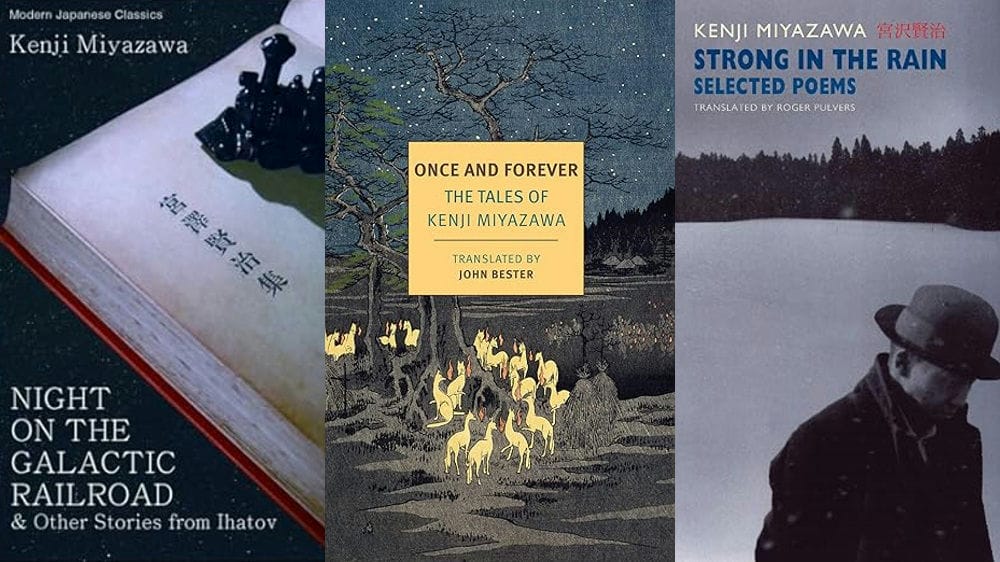
As a poet, he’s best known for Be Not Defeated by the Rain and Spring and Asura.
As a writer of children’s literature, his most famous works include Night on the Galactic Railroad, Matasaburo of the Wind, and The Restaurant of Many Orders.
He also worked as an agricultural educator and was deeply devoted to the Lotus Sutra — a core text of Buddhism. He lost his beloved younger sister, Toshi, at an early age and later died of acute pneumonia at just 37. During his lifetime, he remained largely unknown. It was only after his death that his work began to receive the recognition it deserves.
You may also have heard of Ihatov — a fictional utopia that appears in many of his works, inspired by and named after his homeland of Iwate.
Probably an Introvert
From an early age, Miyazawa had a profound love of nature. He would observe the mountains and farmlands of Iwate with quiet attention, using what he saw as inspiration for his poems and stories. He often enjoyed walking alone or spending time in quiet reflection — it was in these still moments that much of his creativity seemed to bloom.
He probably knew he was a quiet, reserved person — his letters include mentions of how difficult it was to interact with students during his agricultural lectures.
At the same time, he was known for his deep empathy. He gave away his own belongings to those in need and dedicated himself to improving the lives of poor farmers. He embodied what you might call “quiet compassion” — the kind that acts not for praise, but from the heart.
His poem Be Not Defeated by the Rain is often said to reflect the kind of person he aspired to be: humble, modest, and deeply connected to others and to nature, all while avoiding the spotlight.
Fairy Tales Are Different When You’re an Adult
The more I read about Miyazawa’s life, the more I find myself relating to him. Even if he didn’t call himself an introvert, I’m pretty sure he was 😊
I’ve read several of his works, and I have to say — I love his fairy tales. I’ve always been drawn to them, but his stories have a uniquely Japanese sensibility that sets them apart from Western ones.
Fairy tales are written for children, so they’re easy to read, with charming illustrations that give them a gentle, inviting feel. Just looking at them can bring comfort. But beneath their simplicity, many fairy tales contain surprisingly deep messages — the kind that speak to us more clearly as adults.
Even if you’re not much of a reader now, chances are you encountered fairy tales when you were little.
Those emotions and memories from childhood don’t disappear — we just forget them.
But if you revisit those stories, even for a short while, something may stir inside you. And when you return to the real world, your heart might feel a little warmer… and maybe even a little renewed 😌
Works
Excerpt from Be Not Defeated by the Rain
Be not defeated by the rain,
nor let the wind prove your undoing,
nor succumb to the snow or the heat of summer.Be strong in body,
unfettered by desire,
never losing temper,
always quietly smiling.Eat four bowls of brown rice a day,
some miso and a few vegetables.
Watch and listen carefully,
understand well, and never forget.Live in a small thatched hut
in a field shaded by pine trees.If there is a sick child in the east,
go and nurse them.If there is a tired mother in the west,
go and carry her sheaves of rice.If someone is near death in the south,
go and say, “You don’t need to be afraid”If there is a quarrel or dispute in the north,
tell them to stop — it’s not worth it.Weep when there is drought,
wander in confusion when the summer is cold.Be called a fool by everyone,
neither praised nor blamed.That is the kind of person
I want to become.