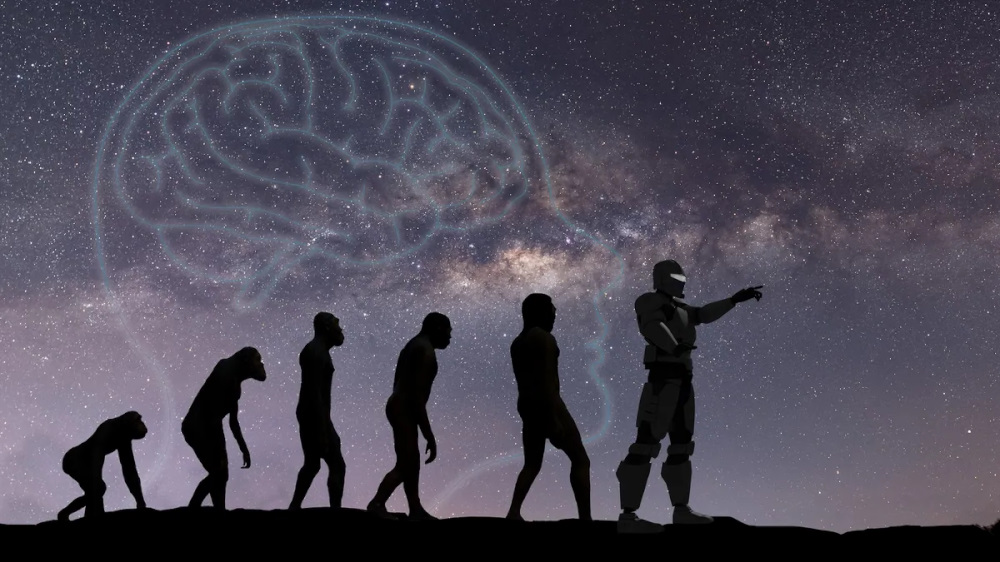
Scientists Who Seem Introverted
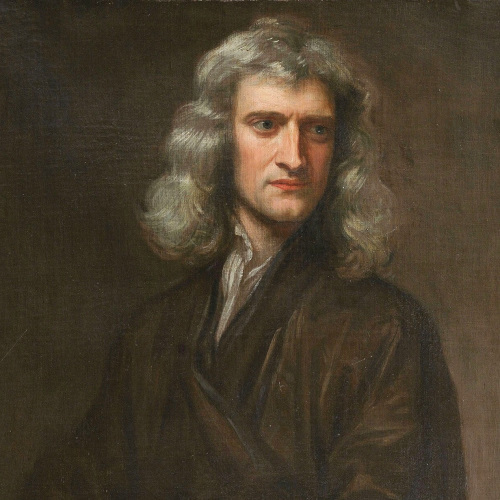
Isaac Newton
Natural philosopher, mathematician, physicist
1642~1727 England
Quiet by nature, he often spent long hours alone at his desk, preferring calm to company. During the plague, he withdrew to his hometown and worked in near-total solitude, pushing his studies on gravity and light forward with unusual clarity.
Thinking at his own pace and sinking deeply into ideas — a brilliant mind that reshaped science.
<Law of Universal Gravitation>
Revealed that all objects attract one another — a single principle explaining falling apples, the Moon’s motion, and the paths of planets.
Today, it forms the basis of satellite orbits, space missions, and even the GPS on our phones.
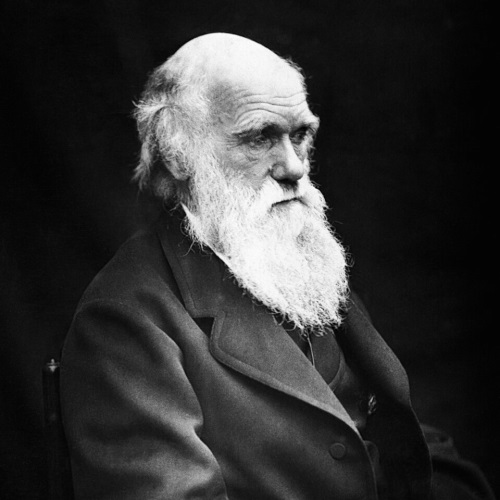
Charles Robert Darwin
Naturalist, biologist, geologist
1809~1882 England
Drawn to quiet observation from childhood, often studying rocks, plants, and insects on his own. On the Beagle voyage, kept his notebook close and focused on the smallest details of the natural world.
Patient record-keeping and steady curiosity led him toward the idea of evolution.
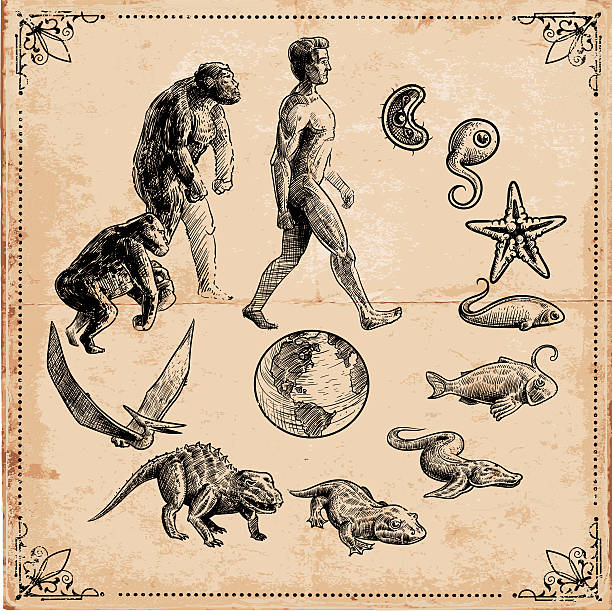
<Theory of Evolution (Natural Selection)>
Proposed that individuals better suited to their environment are more likely to survive and pass on their traits, gradually shaping life over time.
A theory now taught as common knowledge in schools, so familiar that “evolution” appears everywhere — from biology classes to everyday conversation, often used without a second thought.
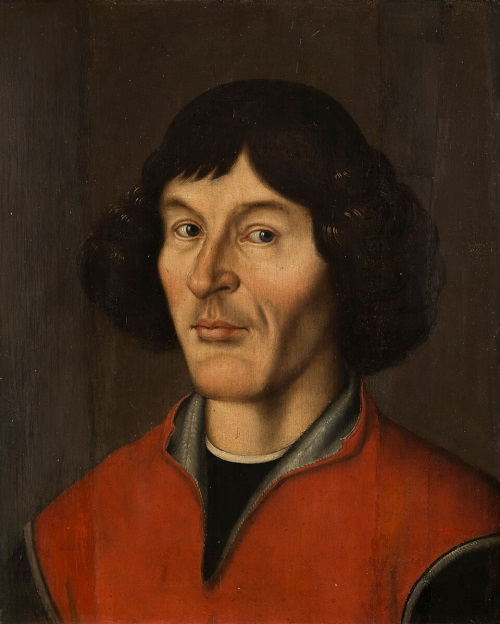
Nicolaus Copernicus
Astronomer, mathematician, natural philosopher
1473–1543 Kingdom of Poland
Quietly observing the movement of the heavens, he maintained a lifelong fascination with the positions and cycles of the stars. Preferred deep thought at his desk to public debate, carefully questioning the long-accepted geocentric model.
Over many years, he refined his ideas in silence, guided by cautious reflection — reshaping how the universe itself was understood.
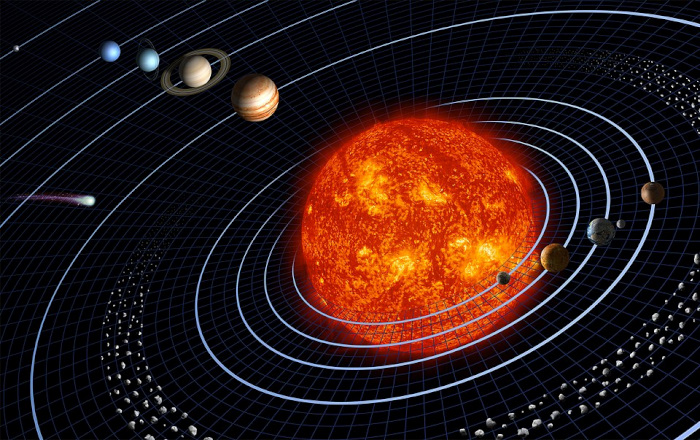
<Heliocentric Theory (Sun-Centered Model)>
Proposed that Earth is not the center of the universe, but moves around the Sun along with the other planets. Because this idea challenged the accepted worldview of the time, it was rarely discussed openly during his lifetime.
Later carried forward by Galileo and Kepler, his theory became the starting point of modern astronomy.
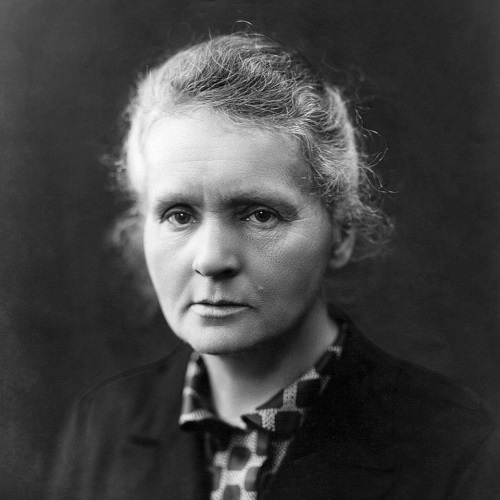
Marie Curie
Physicist, chemist, pioneer of radioactivity
1867〜1934 Poland (later France)
Deeply devoted to learning, often losing herself in books and long hours of quiet study. In the laboratory, worked with unwavering focus, spending countless days refining measurements and observing the faintest hints of new phenomena.
Through tireless effort, she opened a window onto the unseen world of radioactivity.
<Research on Radioactivity:Discovery of Radium and Polonium>
Together with her husband Pierre, established radioactivity as a scientific concept and discovered the elements radium and polonium.
Though these breakthroughs laid the foundation for modern radiation therapy and medical imaging, the risks were not yet understood, leading to tragedies such as the “Radium Girls.” Today’s strict safety standards were built on the lessons learned from this era.
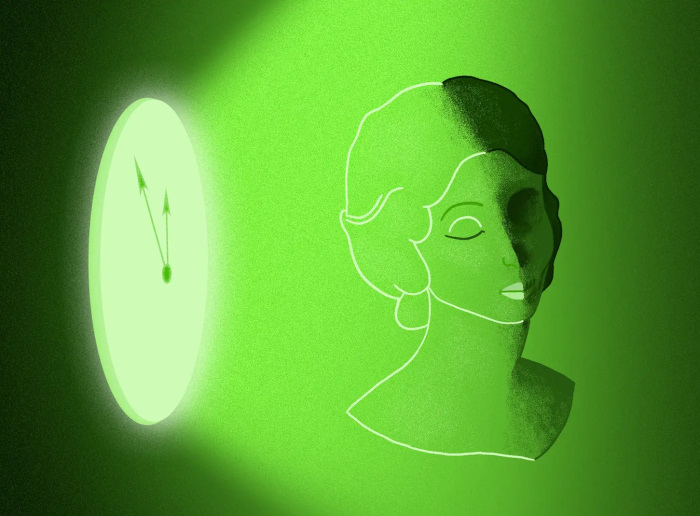
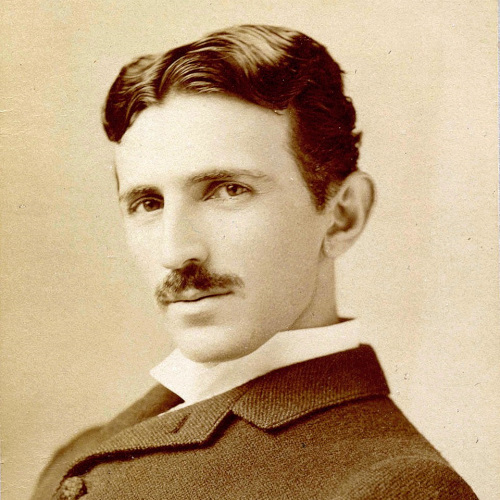
Nikola Tesla
Inventor, electrical and mechanical engineer
1856〜1943 Austria-Hungary (Croatia)
Gifted with vivid imagination, often nurturing ideas in long stretches of quiet solitude. Preferred contemplation to social circles, running entire machines in his mind until each part moved with perfect clarity.
Ideas often arrived fully formed — the mark of a solitary inventor whose vision reached far beyond his time.
<AC Power System and the Tesla Coil>
Developed the alternating-current system that made long-distance power transmission practical, shaping the backbone of modern electrical grids.
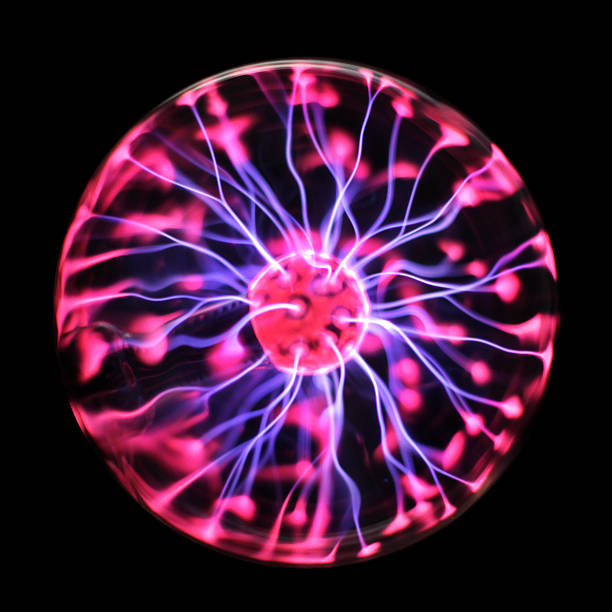
Also created the Tesla coil, producing high-voltage arcs that revealed the behavior of electromagnetic forces in striking visual form.
From today’s power networks to experiments in wireless energy, his influence continues to echo across fields and technologies.