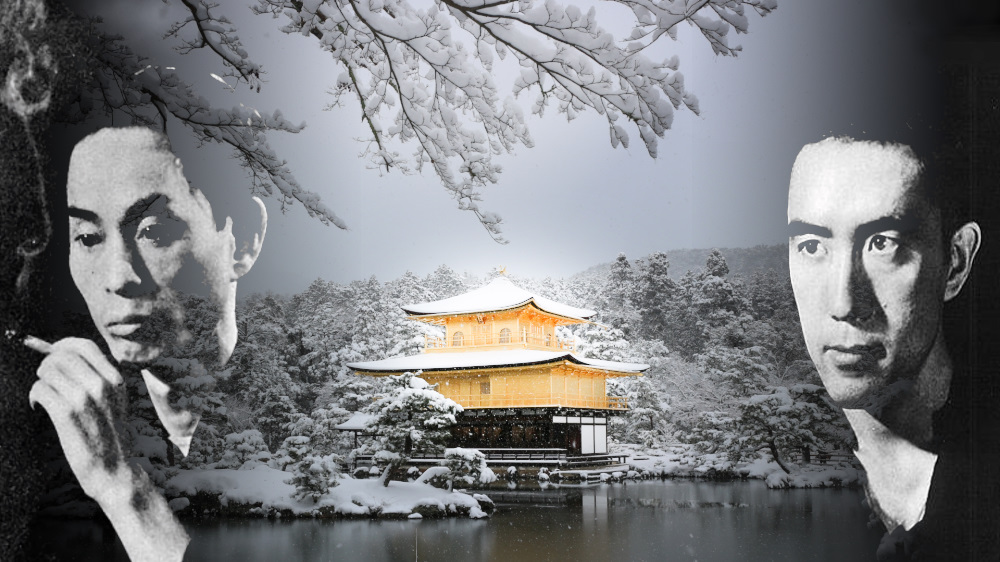
This time, I’d like to introduce two of Japan’s most renowned modern writers, along with some of their works.
Why these two? Well, partly because I personally admire them — but also because their lives overlapped. Kawabata was more than twenty years older, but they were known to go out drinking together from time to time. From my generation’s perspective, they feel like towering figures of the same era. I found it fascinating to look at them side by side, so I wrote this article to share that perspective.
Their Relationship
One key connection between them was the Nobel Prize in Literature. In 1968, Kawabata became the first Japanese writer to win the prize. Mishima, too, had been regarded as a strong candidate that year. When Kawabata was selected, Mishima reportedly offered him sincere congratulations — though what he truly felt inside remains unknown.
Up until that point, they had been writers who strongly regarded each other — perhaps even with a kind of mentor-student bond. But after the award, it is said their relationship changed, and they began to grow distant. That’s understandable, I think. Looking at the fiery passion that burned through Mishima’s work, it’s easy to imagine he poured his whole soul into it. For someone so fiercely driven, ambition would have been second nature — and few people, no matter how generous, can truly celebrate another’s success without reservation.
Another link lies in how their lives ended. I wasn’t yet born at the time, but like many people, I’ve seen the books and photos of Mishima’s shocking final act. Witnessing it in real time must have been even more stunning. It may sound blunt to say so, but in a way, it was a death that seemed uniquely his — dramatic to the last (suicide by seppuku). I have no right to judge it, but surely it left a deep impact on Kawabata. Not long after Mishima’s death, Kawabata too met a shocking end — suicide by gas inhalation. Perhaps their views on life and death — always present beneath their works — had finally come to the surface.
Their Complexes
Now that we’ve looked at their backgrounds, let’s go a little deeper into their inner worlds. The keyword here is “complex”
Something all of us carry — you do too, right? I certainly have my share…
Even for famous novelists, it’s no different. I believe that complexes are essential to understanding the depths of human nature — and as such, they’re an irreplaceable driving force in creative work. When seen through this lens, their personalities and their relationship with their art start to come into sharper focus.
・Yukio Mishima
You may be familiar with photos of Mishima in his later years — muscular, stoic, very masculine. But as a child, he was frail and nervous. He excelled academically, but was poor at sports (he was even exempt from physical education for a time). Raised primarily by his overprotective grandmother and a group of maids, his home life was a closed, feminine world. He later recalled, “I was raised under the excessive protection of my grandmother and the maids.”
Within that environment, he developed a deep-seated inferiority complex about his weak body, along with a growing yearning for “manliness” and “strength.” This, in turn, led him to pursue intense physical training through bodybuilding and kendo.
These conflicting, repressed, and obsessive emotions are vividly expressed in his work — channeled through his eloquent, powerful prose. And perhaps, they also led to the dramatic end of his life.
・Yasunari Kawabata
Kawabata lost his parents, grandparents, and sister all at a young age. By the time he was just 15, he was completely alone in the world. This series of losses is said to have shaped his personality profoundly. In his diaries, he wrote: “I am not just an orphan — I am the very embodiment of loneliness.”
He was also extremely quiet, and found it difficult to express his emotions in front of others. In that sense, he was a kind of predecessor to us introverts.
His upbringing and personality are clearly reflected in his works. But unlike Mishima, he rarely voices emotions directly — instead, he speaks through scenery, through objects, through silent gestures.
Each carried deep and powerful wounds —
unspoken voids etched into their being.
As fellow novelists, they crossed paths,
as if drawn together to fill what the other lacked.
And in the end, those very voids were laid bare once more.
Books by Yasunari Kawabata
Now, let me share a few works by each author — the ones that spoke to me the most.
1.Snow Country
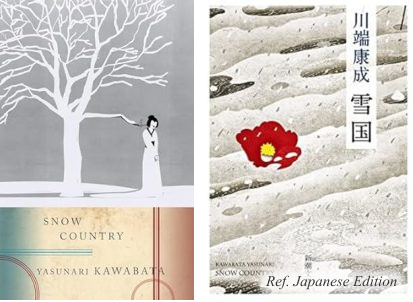
This novel begins with one of the most famous opening lines in Japanese literature:
“The train came out of the long tunnel into the snow country.
The earth lay white under the night sky.”
If I had to sum up the entire work in one word, it would be serenity. The snowy landscapes and the quiet atmosphere of the hot spring town echo the protagonist’s inner world. The story’s unfulfilled love and sense of transience leave behind a haunting stillness that lingers throughout the book.
That’s what I say now — but if I had read this as a child, I probably wouldn’t have grasped any of that quiet depth…
2.Thousand Cranes
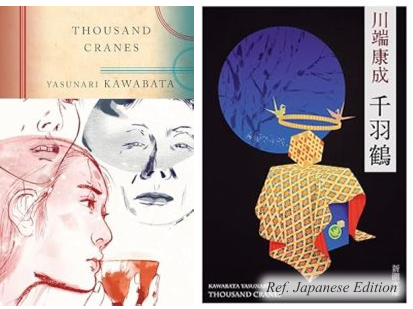
Set in the world of the Japanese tea ceremony, this novel is steeped in the spirit of wabi-sabi — the beauty of transience and imperfection. The story expresses the fragility of life and the inevitability of loss, woven through the tea gatherings that bring the characters together.
In the tea ceremony, great importance is placed on the tools — the tea bowls, the hanging scrolls — and on the gestures of those who handle them. The novel mirrors this, imbuing each object and movement — and the symbolic thousand cranes — with layered meaning. But nothing is stated outright. Instead, emotions rise up through the spaces between the words, inviting the reader to sense what’s left unsaid.
It’s a perfect embodiment of what the Japanese call “reading the air” — sensing things left unsaid, between the lines.
Books by Yukio Mishima
1.The Temple of the Golden Pavilion
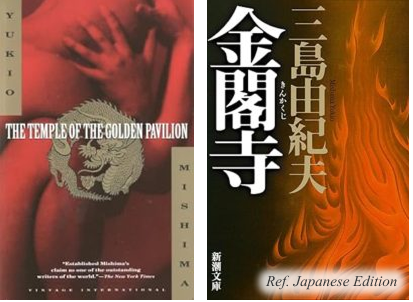
Based on the real-life arson of the Golden Pavilion, this novel explores a protagonist consumed by opposing impulses — the yearning for beauty, and the urge to destroy it. (I was shocked when I first learned it was based on a true event)
Mishima’s prose is dazzling yet razor-sharp — a true pleasure to read. Many fans are drawn to his work first and foremost for the style. Unlike Kawabata’s subtle touch, Mishima boldly dives into the psychology of his characters and the world around them, describing it all in elaborate, fiercely crafted sentences.
2.Confessions of a Mask
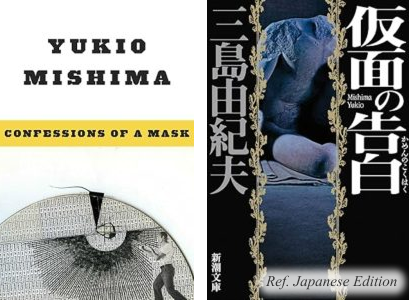
This semi-autobiographical novel follows a protagonist who secretly harbors feelings for other boys while outwardly trying to maintain a facade of normality. It explores the anguish of living behind a mask in order to conform.
I can relate to that. In the past, I too forced myself to act extroverted, masking my naturally introverted nature. That tension — between who you are and who you pretend to be — really struck a chord with me.
_/_/_/
That’s it for today’s literary introduction.
If you’ve discovered a new side to these authors — or felt a deeper connection to their works — I’m truly glad. Of course, Kawabata and Mishima wrote many more books beyond the ones mentioned here, so I hope you’ll explore further and find a favorite of your own.