That excitement again!
But this time, the games aren’t available on regular TV in Japan. I was already a little disappointed and wondering what to do…
And then something even more disappointing happened.
The United States attacked Iran.
It felt like suddenly being caught in a heavy downpour while casually watching a baseball game with a beer in hand.
How should I face a situation like this?
Instead of turning away, I tried to think about it.
Because this is a sensitive topic, I will avoid discussing the right or wrong of the attack or its political background as much as possible. Instead, I will focus mainly on the personal impressions I felt at that moment.
A Feeling I Haven’t Had Since 2001
The World Baseball Classic — an international baseball tournament — is back for the first time in three years. Last time, Japan won the championship in spectacular fashion, thanks to the incredible performances of players like Shohei Ohtani. I remember sitting in front of the TV, on the edge of my seat. It was electrifying ⚾
I’m sure many people felt the same way I did, and had been looking forward to experiencing that excitement all over again.
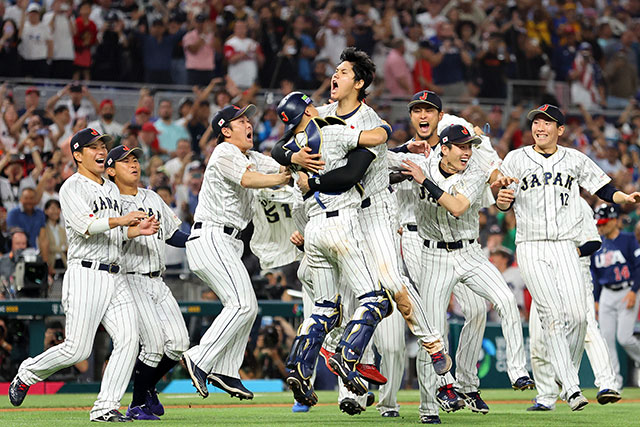
In Japan, television, newspapers, and online media had been dedicating a lot of time to building up excitement for the tournament. Day after day, coverage continued, and I could feel my own anticipation rising along with it.
And then — just as those feelings were building — the news suddenly broke:
The United States had attacked Iran.
The WBC and tragedy.
Light and darkness, standing in stark contrast.
I felt almost overwhelmed by that gap.
The feeling reminded me of something I experienced back in 2001, during the September 11 attacks in the United States.
~ At the time, I was a student. I was alone in my room, casually enjoying a variety show on TV. Suddenly the broadcast cut away, and footage appeared showing a plane crashing into a skyscraper. I had no idea what was happening. I just sat there, confused. Positive and negative emotions mixing together in a strange way — a dizzying feeling, as if my mind couldn’t quite process it all.~
More recently, negotiations between the United States and Iran had been scheduled. Conflicts like Russian invasion of Ukraine or the war between Israel and Gaza Strip were shocking as well, but even without judging right or wrong, I could at least understand some of the background behind them.
But this attack by the United States left me wondering:
Why? Why go this far?
My thoughts felt even more tangled than before…
It Doesn’t Feel Real
Until recently, I had been watching TV coverage of the players preparing for the WBC — their training camps, their practice games. And then suddenly, the news reported that Iran’s supreme leader, key officials, and even civilians had been killed. The emotional swing between those two worlds shook me.
On television, baseball games and news from Iran appeared one after another. Perhaps my brain was unconsciously trying to protect itself from such abrupt emotional shifts, because before I knew it, I found myself staring blankly at the screen. Part of me watched it as if it were someone else’s story — something happening far away in another world. It simply didn’t feel real.
One reason for this lack of reality might be the vast difference between the way Americans speak and act — especially figures like Donald Trump — and the mindset of someone like me in Japan.
No matter how strained relations might be with another country (perhaps something like Japan’s relationship with North Korea), the idea of attacking a country like Iran and trying to justify it afterward is almost impossible for me to imagine. It’s simply beyond my understanding.
I don’t know whether I represent a typical Japanese mindset. But personally, I tend to avoid conflict whenever possible and try to keep things peaceful with the people around me. Even when I believe I’m right about something, if speaking up might damage a relationship, I sometimes choose to swallow my words. And since I’m an introvert, perhaps even more so.
Still, an attack on another country is ultimately a decision made by a nation, not by ordinary individuals. That makes me wonder what everyday Americans actually think about this situation. Are the opinions we see in the media really the majority view? And what do people in other countries think? These are questions that linger in my mind.
A Global Battle for the Remote
But changing the subject for a moment—
Are you planning to watch this year’s WBC?
I’m honestly still undecided… The cost is a bit of a hurdle for me.
In Japan, television traditionally runs on a system where broadcasters earn revenue from advertising, allowing viewers to watch for free. That’s simply been the norm for a long time.
So the WBC, which many of us watched for free last time, now requires a subscription to Netflix. And somehow, that feels like a bigger psychological barrier than the actual price itself. In the United States and Europe, paid viewing seems to be the standard — especially for sports.
But why can’t we watch it on Japanese television this time?
Many articles have already explained the reason: Netflix’s financial power.
The broadcasting rights for the WBC — already a hugely popular event — skyrocketed compared with the last tournament. The price simply became too high for Japanese TV networks to afford. So Netflix, a global company based in the United States with viewers all over the world, ended up buying the rights and streaming the tournament.
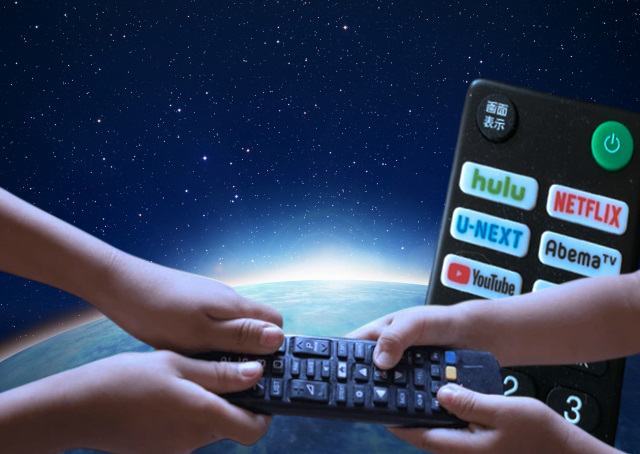
A global battle for the remote.
Watching this whole situation unfold between Netflix and Japanese television networks, an image suddenly came to mind.
Once upon a time, most households had just one television. Families would argue over which channel to watch, while broadcasters competed to capture viewers’ attention. Now that same struggle seems to be playing out not just within a single household — or even within one country — but across the entire world. Screens everywhere — televisions, smartphones, computers — all competing for our attention.
Even here in Japan, an island nation that has long lived in relative peace and tends to shy away from conflict, it’s becoming harder to pretend we’re not part of it.
That thought hit me again.
Distant Suffering
We live in an age where real images from around the world flow instantly and endlessly through our televisions, computers, and smartphones. Yet the more information we receive, the more selective we become. Anything that feels unrelated to our own lives is dismissed in an instant. Gradually, we grow used to the constant stream of stimulation, and our senses begin to dull.
Even when we see scenes of people crying out in grief after losing their families in war, it can start to feel like watching a scene from a movie. The world we see through videos begins to feel strangely distant — as if it were someone else’s story.
Distant Suffering
This is a term used in sociology and media studies.
Even when we witness tragedies around the world, we often have no direct way to help. In that moment, suffering risks being transformed — not into something we try to relieve, but into a kind of spectacle.
In today’s society of endless information consumption, several concerns are often pointed out:
・Crisis of Pity
When images of suffering continue to pour in, our emotions cannot keep up. Eventually we become numb, feeling less and less.
・Compassion Fatigue
Facing an endless stream of tragedy, people grow psychologically exhausted. The ability to empathize weakens, and over time, interest fades.
・Ironic Spectator
Our attention shifts away from those who are suffering, and instead focuses on our own feelings — on the fact that we ourselves feel sad about it.
Until now, I sometimes felt a quiet sense of guilt for seeing these tragedies as if they belonged to a distant world. But it turns out this is something that has already been discussed and examined. Perhaps many people experience something similar. How about you?
▇ ▆ ▅ ▃ ▂ ▁
Well, the recent U.S. attack on Iran left a strong impression on me. Perhaps because of that shock, I found myself thinking about many different things. The feelings I had this time are probably something I’ll continue to wrestle with — asking myself questions again and again.
But still…
The WBC is finally about to begin.
(The qualifying rounds have already started, haven’t they?)
So at least when we’re watching baseball, let’s allow ourselves to simply enjoy it to the fullest ⚾