
Have you ever heard the term “brain rot”?
It refers to the short-form videos that children around the world are currently obsessed with. The trend reportedly first caught fire on TikTok. It was even selected as the 2024 “Word of the Year” by the Oxford University Press (OUP) and has since been officially added to the dictionary.
The videos themselves are said to be generated by AI, and there’s even an online game featuring the same character that has become hugely popular.
When I first watched it, I found myself staring at the screen in stunned silence…
How Our Minds Slowly Erode
This is the video that prompted me to write today’s article.
What did you think?
Perhaps it left you at a loss for words. After my initial speechlessness, a familiar phrase drifted into my mind: “Kids these days…” 😅
There’s no real meaning in the content itself. No message to convey, no deeper intention behind it. What it offers instead is overwhelming visual impact, a rhythm and sound that won’t leave your head, and an addictive quality that quietly melts away your time.
Whether this is good or bad, I’ll leave aside for now.
But let me ask you — what do you think about today’s short videos, social media, and online articles?
Personally, I’ve started to feel a little overwhelmed. Provocative content designed purely to go viral. Fake news. Exaggerated ads that blanket the screen. And lately, mass-produced AI-generated content. The digital world feels so flooded with all of this that there’s barely room to step. Sincere, high-quality work seems buried beneath the noise, harder and harder to find.
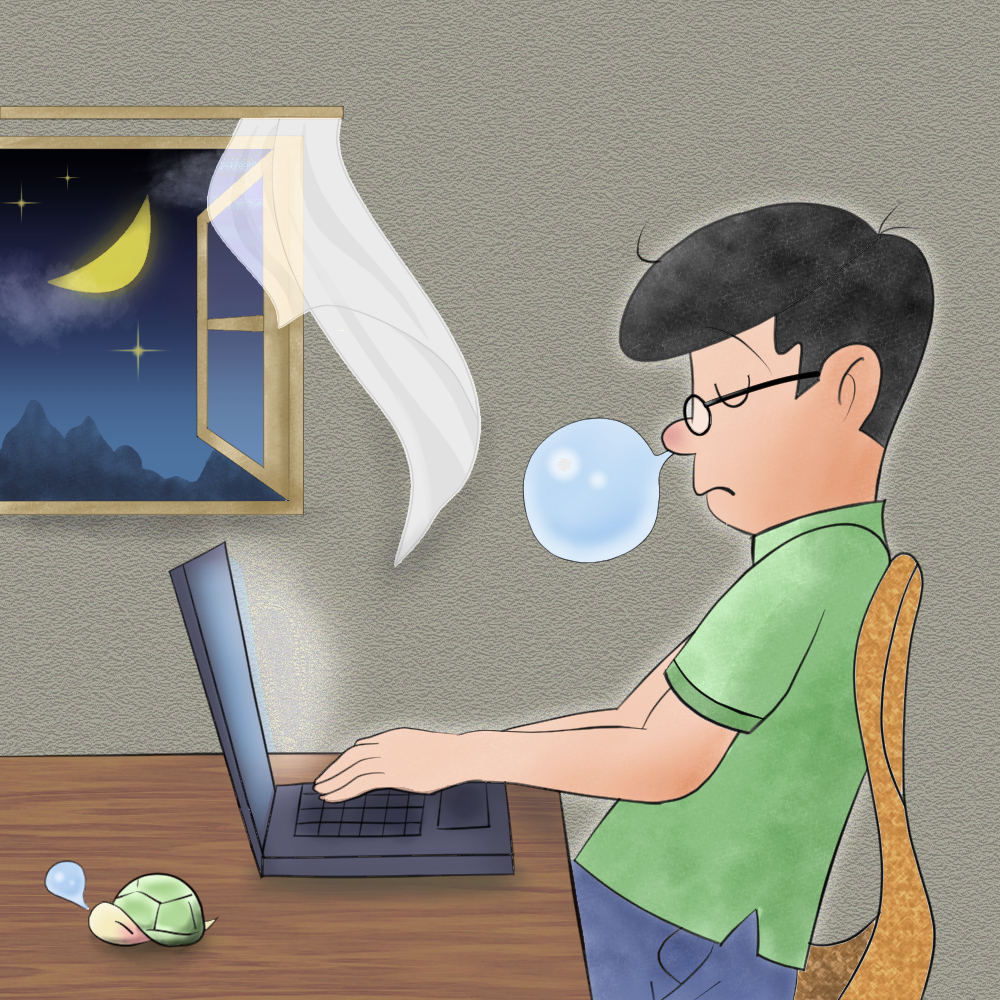
Maybe that’s why, after spending time online, I sometimes feel a strange fatigue — a dull heaviness in both mind and body. (Yes, I run my own blog and spend time browsing online as well, though I try to keep it in moderation.)
A few decades ago, we used to call it “surfing the web.”
There was something simple, almost pastoral about those days. Strangely enough, I find myself missing that atmosphere now.
Smartphone => Brain
Your brain is still living on the savannah.
That line comes from a book I happened to be reading right around the time I watched the “brain rot” video.

The author is a Swedish psychiatrist, and the book was published about five years ago. Reading it deepened the way I think about my relationship with the internet, so I’d like to share some of its key ideas here.
In short:
The human brain is still essentially wired for the Stone Age. It hasn’t fully adapted to our modern digital society. After all, for millions of years — more than 99% of human history — we lived in primitive environments. Our brains were optimized for that world, not today’s world.
Smartphones (especially social media) are cleverly designed to “hack” the brain — for example, by intentionally triggering the release of dopamine. As a result, since the 2010s, when smartphones became widespread, the number of people reporting depression and other mental health issues has been increasing.
Digital Detox
Have you ever heard the term “digital detox”?
It refers to the practice of intentionally stepping away from digital devices — smartphones, computers, and the constant stream of information — in order to rest both mind and body. The term first appeared more than a decade ago.
It was also mentioned in the book I introduced earlier. What struck me most was how some legends of the IT world approached digital detox when it came to their own children.
Bill Gates
He did not give his children a smartphone until they were 14.
Steve Jobs
He reportedly did not allow his children to use the iPad very much at all.
Both of them imposed strict limits. It seems they recognized early on the powerful influence digital devices could have. (There’s a certain irony in that, of course — given that this was their business. But when it comes to your own children, it’s a different matter.)
Recently, there have been news reports from Europe, Australia, and the United States about efforts to restrict children’s use of social media.
Perhaps we are beginning to see a shift —
a quiet turning of the tide in this ever-expanding digital world…
Humans Are Analog to the Core
We call today’s children “digital natives.”
Will the next generation be “AI natives”?
The future seems to be pulling us toward ever deeper dependence on technology.
And yet, I can’t help but feel that human beings are — and always will be — profoundly analog.
We eat. We sleep. We excrete.
We laugh, cry, get angry,
feel envy, feel tired・・・
In a world that relentlessly pursues digital efficiency, we remain creatures that often exist far outside the bounds of rationality.
The brain was made to move the body.
If we forget that simple truth, we may find ourselves repeating the same mistakes again and again.
The book also pointed this out: modern people spend most of their time sitting, staring at screens, moving only their fingers. As an IT engineer, I spend even more hours than most in front of a display.
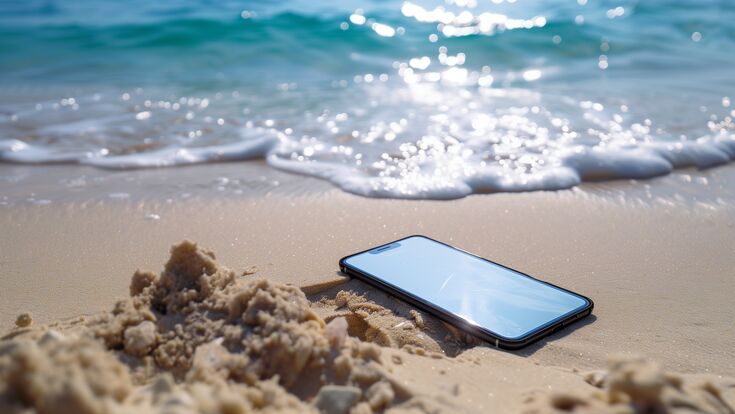
I’m not sure whether, on some unconscious level, I had already sensed something was off. But for several years now, I’ve been living in a way that keeps a certain distance from the digital world — running, practicing aromatherapy, using an abacus, playing musical instruments, traveling・・・
Looking back, I realize that this was my own form of digital detox. Perhaps that’s why both my body and mind feel remarkably well. Lately, I’ve even been thinking: maybe it’s time to seriously take up woodworking or gardening.
That said, I’m not trying to reject digital technology altogether. After all, isn’t it incredibly convenient? It’s hard to imagine life without it now. I was drawn to its possibilities — that’s why I made it my profession in the first place. Still, when I look at the current state of the internet and the rapid rise of AI, I sometimes feel that the time has come to reconsider how we engage with it — and how much distance we choose to keep.
What about you?
Do you have your own version of a digital detox?