Images:
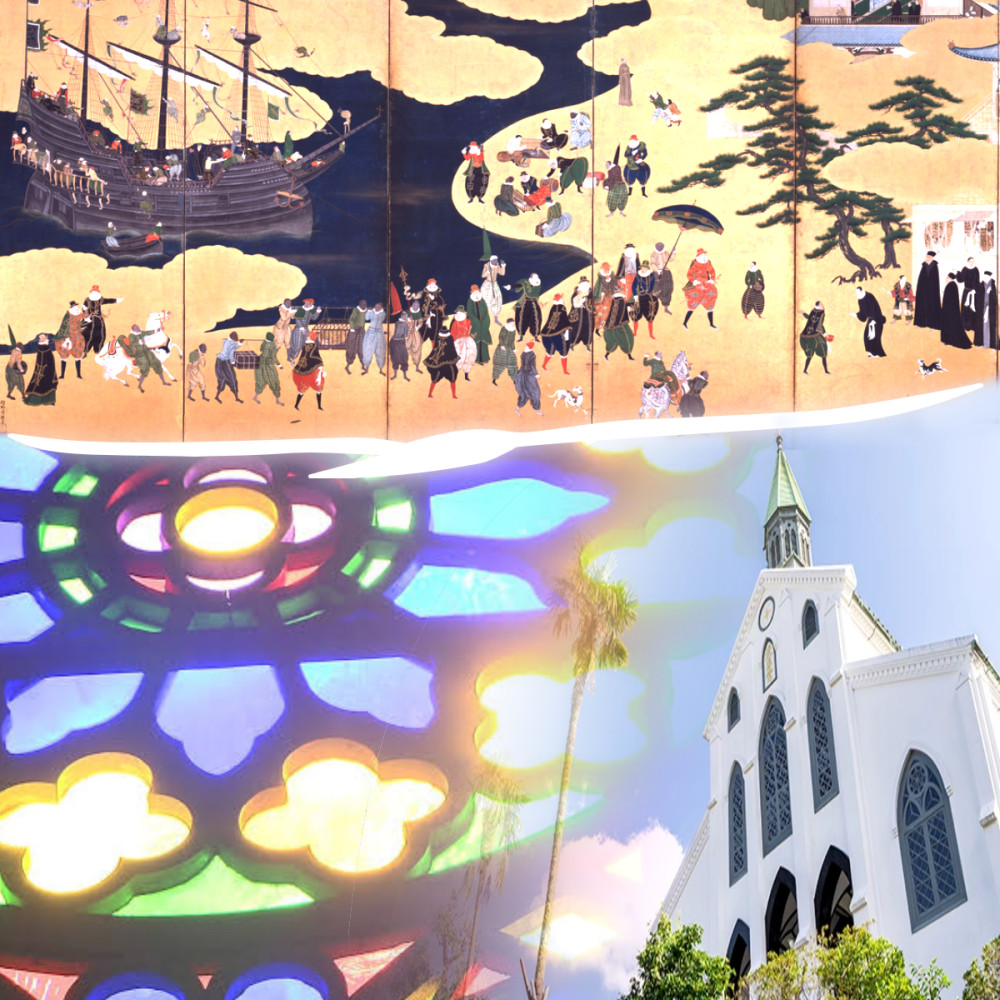
Top: Nanban folding screen from around 1600, depicting trade with Portugal and Spain
Middle: A seagull — a motif symbolizing Nagasaki’s exotic charm and wanderer’s spirit
Bottom: Ōura Cathedral — see text for details
I took an early summer vacation the other day and traveled to Nagasaki Prefecture (It’s located far to the west of Tokyo).
I love traveling, both within Japan and abroad, but this was my very first trip to Nagasaki — and it turned out to be far more fascinating than I had imagined 😌
Memories of the Journey
First, let me share some of the places I visited.
It was a trip where I could reflect on history, feel the fusion of Japanese, Chinese, and Western cultures, and immerse myself in that unique exotic atmosphere. Truly, a journey to remember 📌
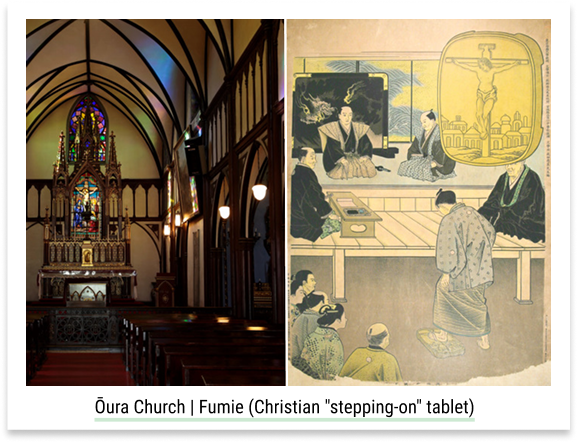
For over 400 years, Nagasaki has been deeply tied to Christianity. Many Japanese will recall the fumie from history textbooks — tablets with Christian images that people had to step on to prove they weren’t believers.
Ōura Cathedral, now a UNESCO World Heritage Site, was the stage of the “Discovery of the Hidden Christians” — believers who had survived persecution during the Edo period and finally revealed their faith again. Standing there, you can almost feel the Western winds that once blew into Nagasaki.
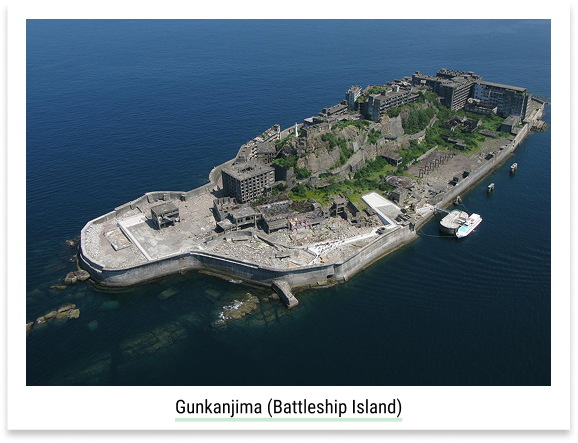
A tiny island once home to undersea coal mines. Officially called Hashima, it came to be known as “Gunkanjima” (Battleship Island) because of its silhouette. At its peak around 1960, over 5,000 people lived here — with schools, movie theaters, even hospitals — a “little city floating on the sea.” As Japan shifted its energy sources toward oil, along with other changes, the mines were closed and the island eventually became deserted. Today, as another World Heritage Site, it attracts visitors with its haunting ruins, quietly echoing the atmosphere of a bygone era.
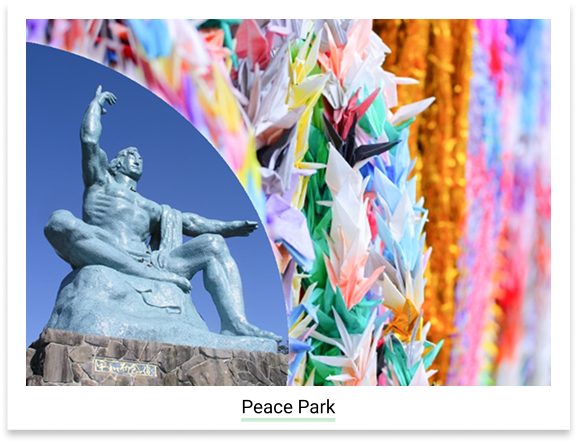
A place that speaks of the tragedy of the atomic bomb and the hope for peace. Built near the hypocenter of the 1945 bombing, the park is home to the Peace Statue and memorials. Visitors leave folded paper cranes on offering stands, their wishes carried in countless colors. These senbazuru are symbols of prayers that cross nations and languages.
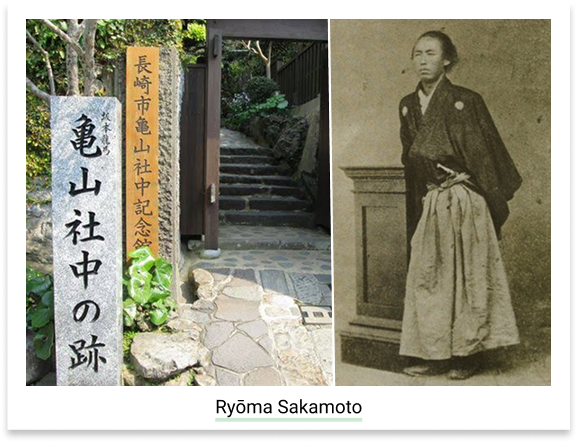
Ryōma Sakamoto — a hero every Japanese knows. Together with comrades, he founded Kameyama Shachu, often called Japan’s first joint-stock company. Later renamed the Kaientai, it engaged in trade, shipping, and even political mediation. Ryōma himself played a key role in brokering the Satsuma-Chōshū Alliance, laying the groundwork for modern Japan.
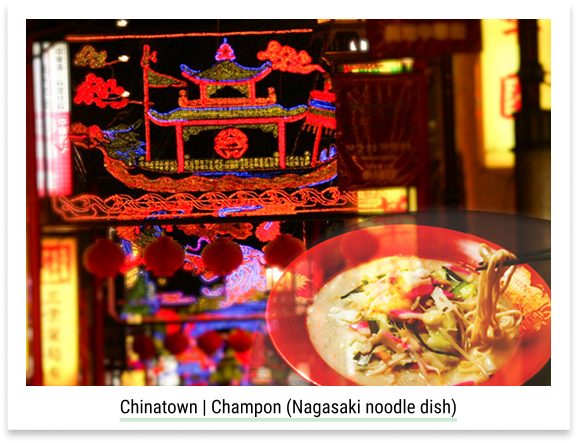
Japan has three major Chinatowns — Yokohama, Kobe, and Nagasaki. Yokohama may be the largest, but Nagasaki’s is said to be the oldest 🇨🇳. And then there’s Champon, the city’s soul food. This hearty noodle dish was created in the Meiji era to provide cheap, nutritious meals for Chinese students studying in Japan.
Of course, there’s also Glover Garden, castella sponge cake, Goto udon… plenty of other charms waiting. The rest, I’ll leave for you to discover yourself 👍
The “Dejima Style” an Introvert Can Learn From
Now, let’s change gears a little. Inspired by the historic site of Dejima, I want to connect this journey back to the theme of this blog — introversion.
Dejima (出島), literally “Exit Island.”
――― It’s something every Japanese person learns about in school. From the early 17th century until the mid-19th century, during Japan’s long period of national isolation, Dejima was one of the very few gateways where exchange with the outside world was permitted. Mainly with China and the Netherlands.
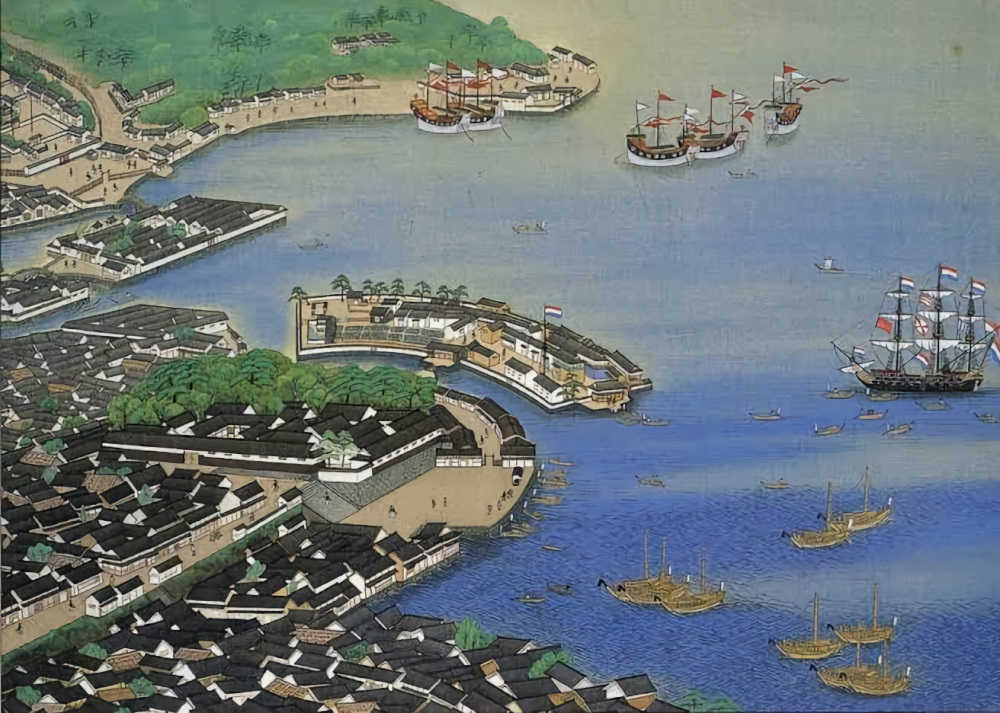
Why isolation? The shogunate wanted to guard against foreign powers — especially the colonial ambitions of Catholic nations such as Portugal and Spain, as well as the spread of Christianity through missionary work — and to maintain stable rule at home. Yet, they didn’t cut everything off. Certain countries were allowed in because they brought valuable knowledge and goods.
Restrict the scope of exchange, and interact only when the timing feels right.
That, I realized, is a style of connection that suits introverts perfectly.
Of course, the ideal is to be friendly with everyone, without drawing lines. I used to think so too. But in reality, that’s hard — if it were easy, we introverts wouldn’t struggle in the first place 😅
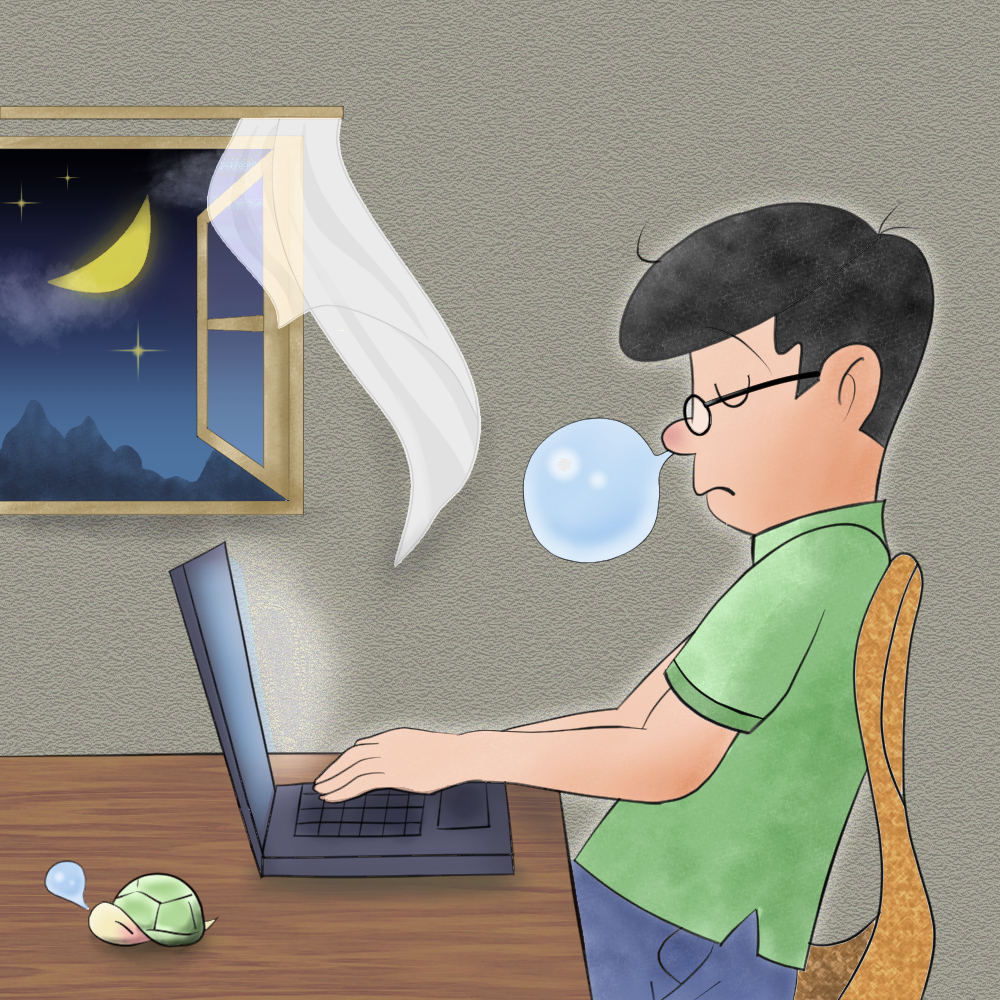
When I was younger, I often felt guilty about limiting interactions. So I forced myself to blend in, to join in conversations and social gatherings. But it drained me, and I couldn’t truly enjoy it. Many introverts will nod along here. That’s why, more recently, I’ve adopted a more strategic style of interaction — something like the “Dejima Style”
And the result?
I can live more naturally, in my own rhythm, and that gives me both energy and peace of mind. It lets me focus on what I love and what I’m good at, making each day feel fuller. Just like Edo-period Japan, which — through its isolation — nurtured its own vibrant culture.
And strangely enough, this change even made socializing easier. With less pressure to be “perfect”, I could approach small talk or gatherings more lightly. By lowering the expectations I had for myself, I stopped overthinking and could simply show up, relaxed 😊
So, why not try your own “Dejima Style?”
And may your journeys, too, become memories to treasure.