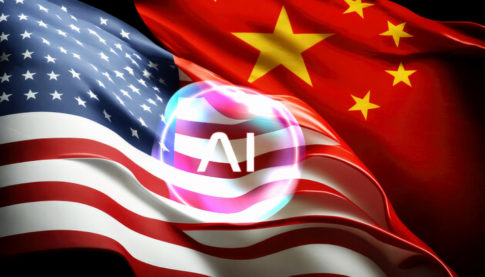
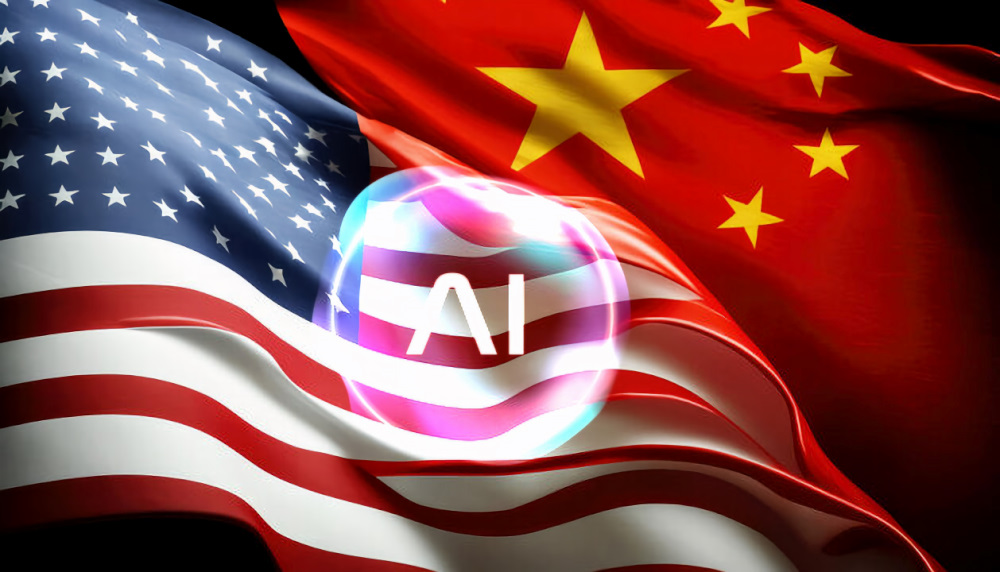
At the end of last year, some surprising news broke.
Meta, the American company best known for Facebook, announced that it had acquired Manus, an AI agent developed by a Chinese company.
In this article, I’d like to write about AI —
a technology that has remained at the center of global attention for several years now —
and the growing battle unfolding around it.
China’s AI
Before looking at China’s generative AI, let’s start with the United States. Most people have probably seen or heard about American AI somewhere by now. These are what are often referred to as the “Big Three.”

So what about China?





Compared to their American counterparts, these AIs may seem less well-known and somewhat mysterious. However, Alibaba, Baidu, and Tencent are collectively known as the “Big Three” (BAT) of China’s IT industry — massive corporations with annual revenues ranging from tens to hundreds of billions of U.S. dollars. DeepSeek, meanwhile, drew significant attention last year for developing an AI comparable to ChatGPT at a dramatically lower cost.
China’s Strengths
Why has China’s AI grown so rapidly over the past few years, to the point where it is now seen as a rival to the United States? Let’s take a closer look.
・Open weights
China has taken an approach of openly releasing the inner workings of its AI models, allowing anyone to use them freely.
In contrast, the United States typically offers AI models through APIs over the internet, while keeping the models themselves completely closed and proprietary. China has taken the opposite path. Its models are made available in a way that allows engineers and researchers around the world to download them, modify them, and experiment freely.
As a result, countless people began using AI freely in their own environments, often on their own servers, identifying issues and improving them as they went. By repeating this cycle day after day, the evolution of these models accelerated dramatically. Tasks that would normally fall on the AI developers themselves were instead carried out voluntarily by users, reducing costs on the company side. Those savings were reflected in lower prices, attracting even more general users — a virtuous cycle that allowed China to rapidly close the gap with the United States.
We’ve seen similar dynamics before.
Windows(closed)vs Linux(open)
iOS(closed)vs Android(open)
・・・
This time, however, the speed of evolution is on an entirely different scale.
・Politics and population
Another major factor is strong government support. China’s political system is a one-party rule under the Communist Party. Setting aside questions of good or bad, compared with democratic systems that move forward while consulting individual opinions and legal processes, decision-making and action are remarkably fast.
China has positioned AI as a national strategy. Clear frameworks of what is allowed and what is not are established quickly, and companies move forward at once within those boundaries. Problems do arise from time to time, but the overall attitude is closer to “try first, think later,” pushing ahead at top speed.
On top of that, China is a massive nation with a population exceeding one billion. Almost as if it had anticipated from the start how difficult democracy would be at that scale, the country presses forward under strong leadership, unfazed by criticism from abroad, with hundreds of millions of people moving ahead in a single, powerful surge.

Our Everyday Lives, Changed by Generative AI
Let me change the subject for a moment.
Do you use generative AI?
I started using generative AI a few years ago, half in doubt. Now, it has become something like an indispensable partner in both my work and personal life. I can hardly imagine what life was like before AI. I suspect many people feel the same way.
Has the way you work changed because of generative AI?
For better or worse, the world has been completely transformed by the arrival of generative AI. My work as an IT engineer has changed entirely as well. AI can now generate programs in an instant. As a result, the value of programming skills themselves has, in many ways, collapsed. Of course, programming alone has never defined what it means to be an engineer. Still, there are moments when I find myself staring into space, wondering what all those years of intense study were for. Even if your profession is different, I’m sure you’ve experienced some kind of change too.
That said, it isn’t all bad. I also program in my free time, and my efficiency has improved significantly. Even technologies I had never touched at work before now feel much easier to explore. Because I can consult AI anytime, about anything, without worrying about social friction, it has become a particularly reliable ally for someone introverted like me.
After the AI Boom
AI booms have happened before — in the 1960s, the 1980s, and again in the 2000s —
but each time they eventually faded due to technical limitations or a lack of practical use. This time feels different. It doesn’t seem like it will end as just another boom. It feels as though it will go as far as it possibly can.
In many ways, The future of the world = the future of AI.
And at the center of that equation lies a fierce battle between the United States and China. Who will ultimately come out on top? With Meta’s acquisition of China’s Manus, it feels as though the direction of this battle may begin to shift. From my perspective as someone in Japan, I’m also curious about the movements of a potential “third force,” such as other parts of Asia or Europe.
No one — not even AI — can predict the future. My honest hope, however, is that this excitement and competition won’t escalate to the point where it becomes “humans versus AI.” That is something I sincerely wish to avoid. Even when I’m told there’s nothing to worry about, unsettling visions of the future still cross my mind…
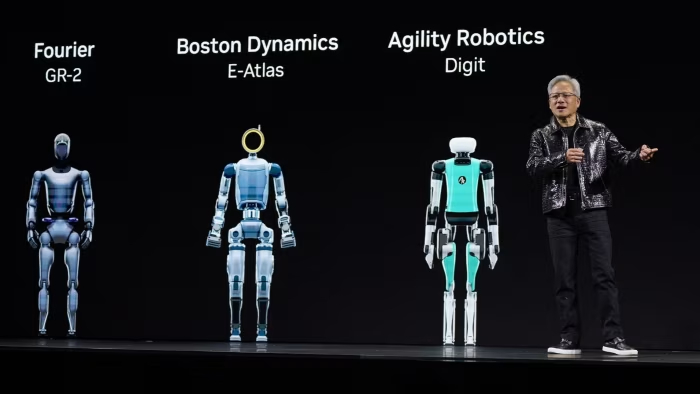
Following last year’s focus on “AI agents,” this year’s emerging trend is said to be “physical AI.” Physical AI refers to AI that goes beyond thinking like a brain and finally acquires a body — becoming able to move and act in the physical world. When I heard this, one particular film immediately came to mind ―――
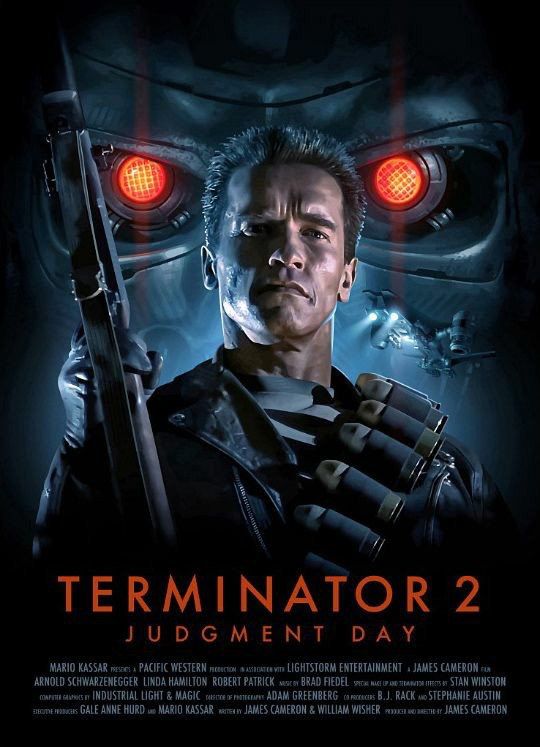
I love this film, but I honestly hope this never becomes reality. I want it to remain pure fiction 😅 And, I choose to believe in a brighter future…
AI will continue to be impossible to look away from. What kind of future do you think awaits us?