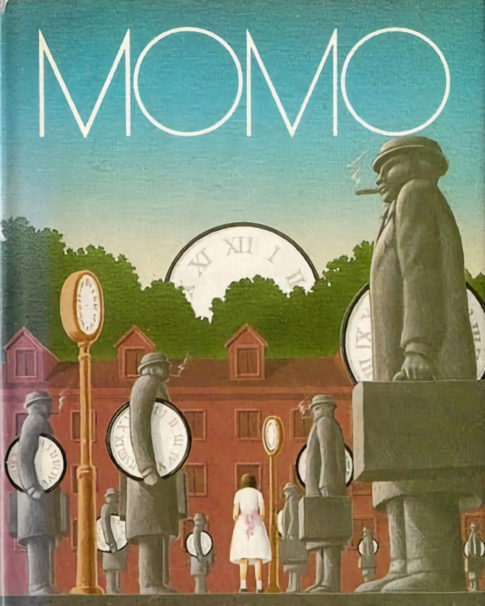
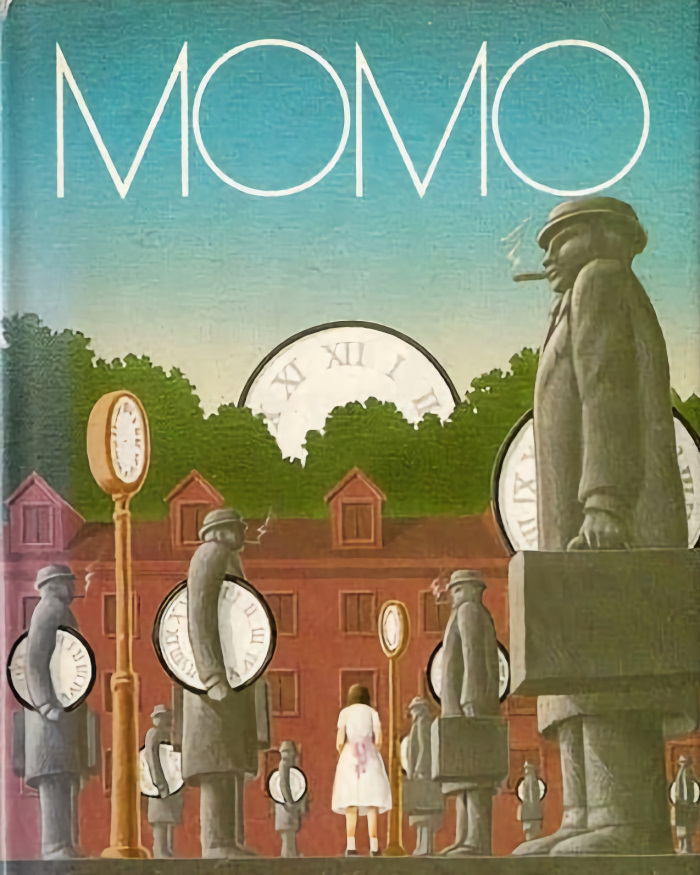
Clocks, you see, are only a very imperfect imitation of something that exists within every human being. Just as we have eyes to see light and ears to hear sound, human beings have a heart to feel time. And if that heart is …
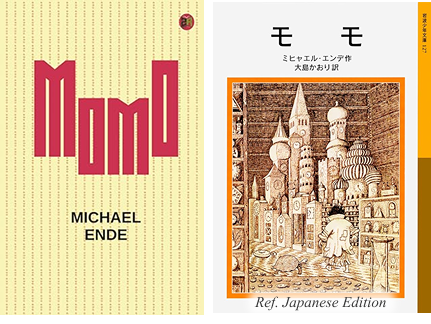
The book I’d like to introduce this time is a children’s novel.
It’s a book for children. But it’s also a story for us adults who find ourselves constantly saying things like:
“I don’t have time.”
“That’s not time-efficient.”
“We need to be more productive.”
It’s a quietly philosophical work that invites us to stop and ask,
What is time, really?
What Kind of Book Is It?
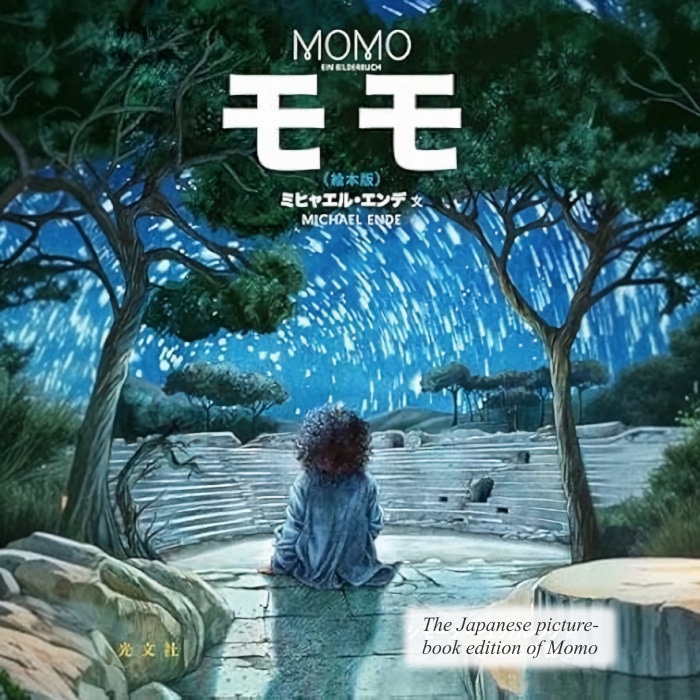
Long ago, on the outskirts of a town in some faraway country, there stood the ruins of an old amphitheater. Living there was a girl with no family and nowhere else to go. Her name was Momo.
At first glance, she seemed like an ordinary girl you might find anywhere. But she possessed one quiet, mysterious gift. She could truly listen to people — and feel with them, from the heart. When people talked to Momo, they found themselves speaking honestly without trying. Their worries slowly loosened, and even long-standing quarrels would fade away.
Momo spent her days in gentle companionship with the townspeople, and the town itself was filled with a calm, peaceful atmosphere. But before long, dark clouds began to gather. Strange figures known as “the Grey Men” started to creep into the town.
They whispered to people like this:
“If you save time, you can become richer. Why not open an account at the Time Savings Bank? Save time now, and it will earn you generous interest.”
From that moment on, something changed. A tense, harsh air began to spread through the town. People rushed through their days as if constantly being chased by something unseen. And little by little, laughter disappeared from the streets.
What, exactly, had happened to the town?
Who were the Grey Men?
And what was their true purpose?
―――
Beginning with the Grey Men, the story is filled with richly imaginative characters:
Momo’s warm and quirky friends, a prophetic turtle, and the guardian of time himself.
The story carries a soft sense of nostalgia, as if you were gently searching through fragments of your own childhood memories. And woven into that gentle fantasy is the author’s firm and unmistakable message to modern society.
It is a book that both children and adults can truly enjoy — each in their own way.
Note: The author, Michael Ende (1929–1995), was a German writer best known for his children’s literature. Interestingly, his second wife was Japanese.
Saving Time?
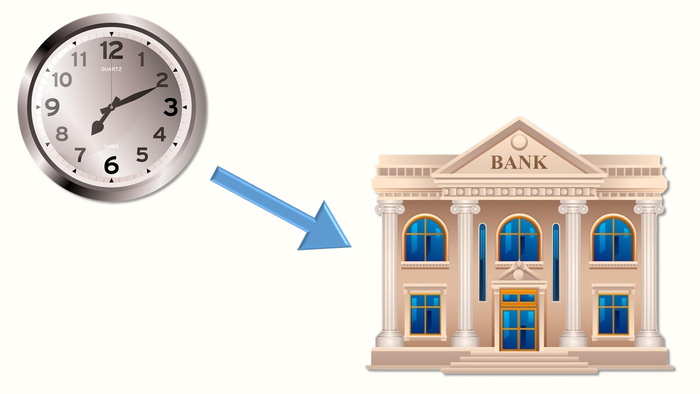
“The Time Savings Bank”
This phrase stayed with me long after I closed the book.
At first, it sounds like the familiar idea of saving time. But the moment you add a “bank” — an account, deposits, even interest — the meaning quietly shifts. Taken literally, it starts to feel strange.
Time isn’t money.
It has no shape, no form.
How could we possibly store it?
And yet, looked at another way, it almost feels as if time is something we can store. Back and forth, this nagging argument kept repeating itself in my head.
By the way, have you ever wondered:
“Why does a day have only 24 hours? Couldn’t we have a little more?”
I often do — especially when I’m busy 😅 But of course, those 24 hours never increase. So if we want to ease our busyness, we have no choice but to cut time somewhere within those 24 hours:
work, study, meals, cleaning, leisure, commuting, sleep.
To do that, we throw ourselves into productivity tools and time-saving techniques, day after day, trying desperately to keep up 💦
Do you find yourself living a similar kind of life?
Time Is Money
Time can be saved — but unlike money, it can’t be stored away. In that sense, time and money are clearly different. That much is obvious. And yet, somehow, they still feel strangely alike. Why is that?
“Time is money”
It’s a phrase most of us have heard more than once.
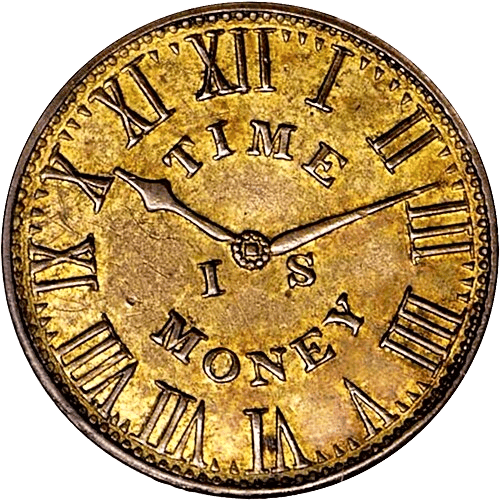
I can’t help feeling that this single sentence lies at the root of the illusion that time and money are the same.
Time = money
– a quiet assumption beneath our values.
Doesn’t it make you wonder when this idea first came into being? Surely it hasn’t existed since the dawn of humanity. So, I decided to look it up 🤔
If you do not value your time, others will not either.
Do not squander time, for that is the stuff life is made of.
Remember that time is money.
These words are attributed to Benjamin Franklin, an American politician and physicist who lived in the 18th century. They appeared in his book Advice to a Young Tradesman — what we might today call a business book.
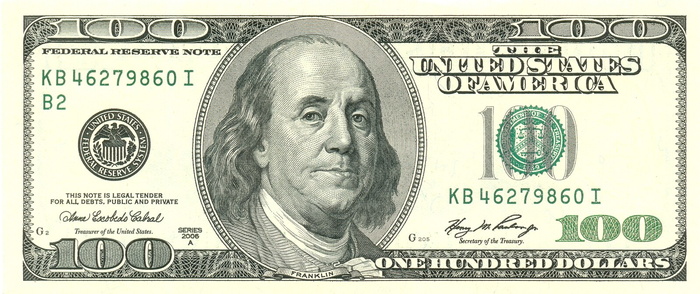
At the time, American society was largely made up of craftsmen and merchants — independent workers. It was a period of transition, from a more agrarian way of working, where labor ended when daylight faded, to a more economically driven system. As people began to realize that how they used their time directly affected their income, Franklin’s words emerged from that growing awareness.
Soon after, history moved on toward the Industrial Revolution, beginning in Britain, and the rise of capitalism. Factories appeared in cities, and machines enabled mass production by large numbers of workers. Work came to be defined by strict time management — how much could be produced within a limited number of hours.
Time → wages.
Time → value.
This way of thinking gradually took root as common sense — and over the course of centuries, it has been quietly passed down to us, here in the present day.
The Time That Awaited Us Beyond Efficiency
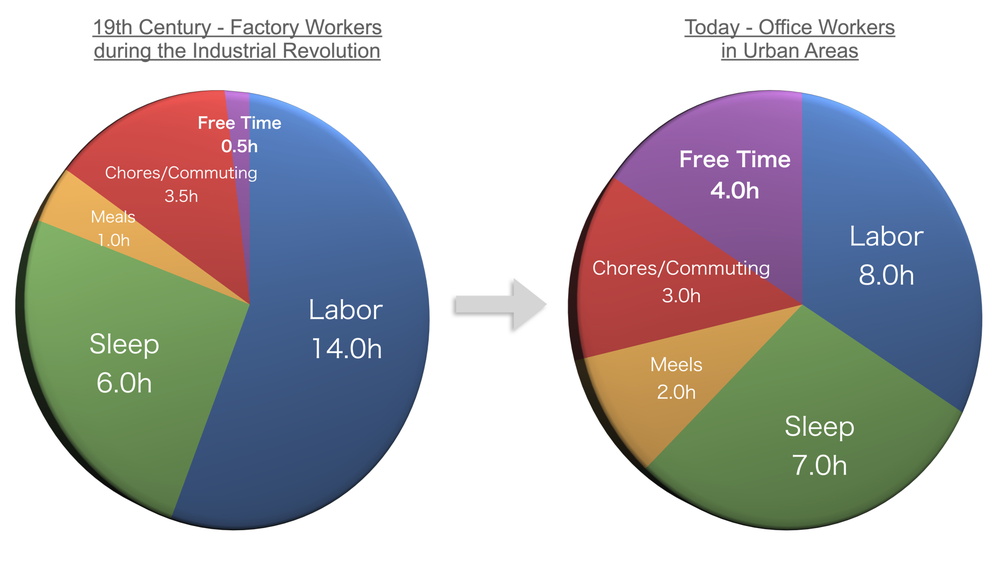
I tried sketching out a typical daily schedule for an average worker — one from the time of the Industrial Revolution, and one from today. (These are based on information from books and online sources)
What do you think?
Of course, modern life varies greatly from person to person. Still, on average, this picture may not be too far off. From the Industrial Revolution to the present day, technology has advanced at a remarkable pace — machines, computers, robots.
As productivity increased and working conditions gradually improved, working hours became shorter. Compared to the past, we now enjoy far more personal free time.
But here’s the question.
What are we actually using this hard-won time for?
When I look at my own life, a few things come to mind…
online shopping? YouTube? time with family? reading? games? social media?
With AI becoming more deeply embedded in our lives, the future seems likely to bring even more free time. And yet — is this time, gained through an endless race for efficiency, really what we wanted? What were we trying to achieve efficiency for in the first place?
These are the quiet, profound questions this book gently places before us.