Do you use TikTok?
It feels like TikTok is mostly used by people in their twenties, doesn’t it?
At least around me, I’ve never heard of anyone my age — a middle-aged man — who actually uses it.
Still, even I sometimes find myself wondering:
Why is TikTok so incredibly popular?
This time, I’d like to talk about the Chinese creator behind TikTok — and how he might actually be an introvert.
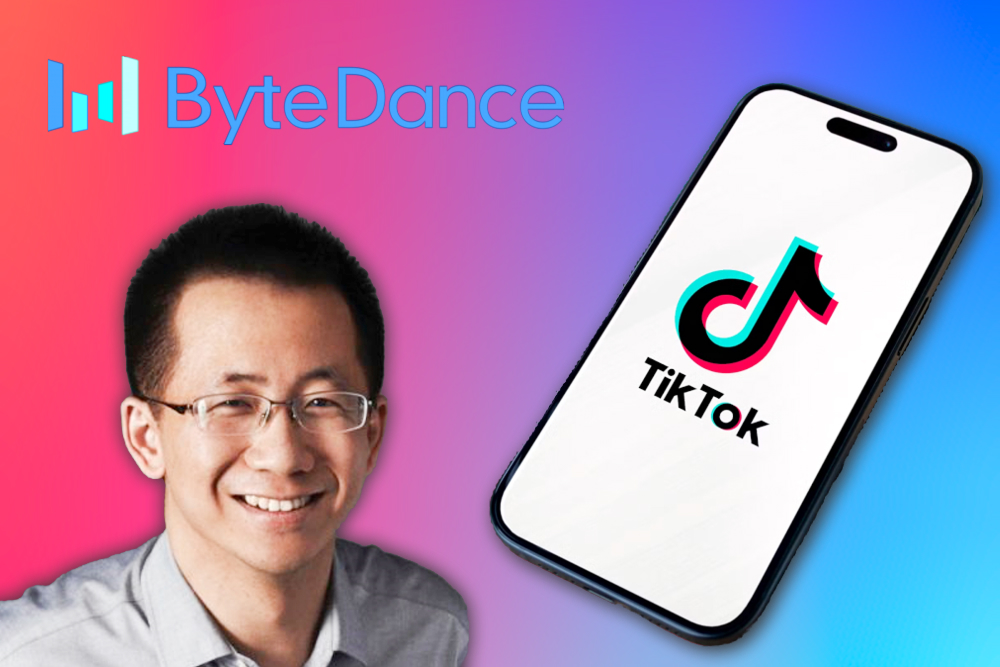
ByteDance
Zhang Yiming(張 一鳴)
If you hear this name and it doesn’t immediately ring a bell, you’re probably not alone.
I came across him for the first time while writing this article.
I was familiar with the company behind TikTok, ByteDance, but compared to other Chinese tech entrepreneurs like Jack Ma of Alibaba, Zhang Yiming has remained largely out of the spotlight. Today, thanks to TikTok’s success, he is said to be one of the wealthiest people in China. Let’s take a brief look at his lesser-known background.
―――
Born in 1983 in Fujian Province, China, Zhang studied software engineering at university. After graduating, he began his career as an IT engineer at Kuxun, a company that operated a travel search website. He later moved to Microsoft, but soon left, reportedly because the corporate culture didn’t suit him. After several twists and turns, he went on to co-found ByteDance in Beijing in 2012, playing a central role in its creation.
The name ByteDance comes from two ideas:
・Byte: a unit of information used in computing — symbolizing digital technology and data
・Dance: an image of information and content moving rhythmically, almost dancing as it flows
In other words, the name reflects a vision of digital information moving fluidly among people, stirring emotions and bringing ideas to life through its rhythm.
The company’s first major product was an app that automatically selected news based on each user’s preferences: Toutiao. It became a huge success in China and is often described as a service that embodied Zhang’s belief that we were moving “from an era where people choose information to one where AI does the choosing.”
Building on that success, ByteDance launched a short-form video app for the Chinese market in 2016: Douyin. Its vertical format and smooth, endlessly scrollable experience quickly captured the hearts of younger users, turning it into one of the country’s top apps almost overnight.
To take this momentum global, ByteDance released TikTok as the international version of Douyin. By acquiring and integrating Musical.ly, a social media platform popular in the West, TikTok rapidly expanded worldwide. By the 2020s, it had grown into one of the most widely used social media platforms on the planet — creating a massive movement through its AI-driven recommendations of short videos, something the world hadn’t quite seen before.

A Classic Introvert by Nature
From here, I’d like to share a few episodes that suggest Zhang Yiming has a introverted personality(Based on various articles)
- Quiet and Low-Profile
Zhang is known for avoiding media appearances and public attention as much as possible. He is often described in the media as “private,” “secretive,” and “low-profile.” - Prefers Solitude and Deep Thinking
He values time spent thinking alone more than socializing. It’s said that during breaks from work, he reads technical and history books, and takes long walks to organize his thoughts — a habit that feels very familiar to many introverts. - Stepping Down from the Spotlight as CEO
In 2021, Zhang stepped down as CEO of ByteDance. According to reports, he explained that he was better suited to quietly focusing on products, technology, and AI rather than managing people. - Built a Social Media Platform — But Wasn’t Comfortable Using It?
Although he created TikTok, Zhang reportedly never posted videos himself and only watched content. At one point, senior executives—including Zhang—were given a challenge: create their own videos and reach a certain number of “likes,” or else do push-ups. He later admitted that this was a surprisingly high hurdle for him.
What do you think?
If you’re an introvert yourself, you might find some of this relatable. Zhang has never publicly declared himself an introvert, but from my perspective, he certainly seems like one 😅
Introverts and Social Media
Do you usually use social media?
I use it only a few times a week at most, so I’d say I’m on the lighter side. I scroll and post at my own pace. And to be honest, one thing I’ve realized is that for introverts, social media can sometimes be a bit too stimulating. Spending long hours on it every day can be surprisingly exhausting 💦
There are, of course, many platforms besides TikTok — Instagram, X, Facebook, YouTube — each with its own character. For someone like me, social media is certainly useful. At the same time, depending on how you use it, it can feel a bit like a strong medicine with serious side effects (perhaps that’s true for everyone…) Of course, some introverts manage social media well, but as a general tendency, I don’t think it’s something introverts naturally get along with.
What I find particularly interesting about Zhang Yiming is that, although he seems to me to be an introvert, he created a loud, flashy platform like TikTok. The person who built a stage full of spotlights and nonstop dancing turns out to be an introvert. At first glance, it feels like a mismatch — but perhaps it’s precisely because he was an introvert that he was able to create it.
Zhang is said to have long been fascinated by data analysis and algorithms — by the question of how data should be shown to people. He seems to be the type who would quietly stare at numbers on a screen, thinking deeply about human behavior and psychology.
What draws people in?
What makes them lose interest?
What sparks obsession?
Rather than stepping onto the stage himself, he imagined these things from the sidelines. As an introvert, I find this very relatable. I often find myself imagining other people’s thoughts and feelings in daily life in much the same way.
Introverts and TikTok
Interestingly, TikTok is sometimes said to have features that may work well for introverts.
Learning that TikTok was created by someone who is widely seen as an introvert gave me a surprising sense of closeness. Writing this article helped me understand the platform better, and who knows — I might even give TikTok another try.
I hope you find a social media style that feels comfortable and true to you♪