
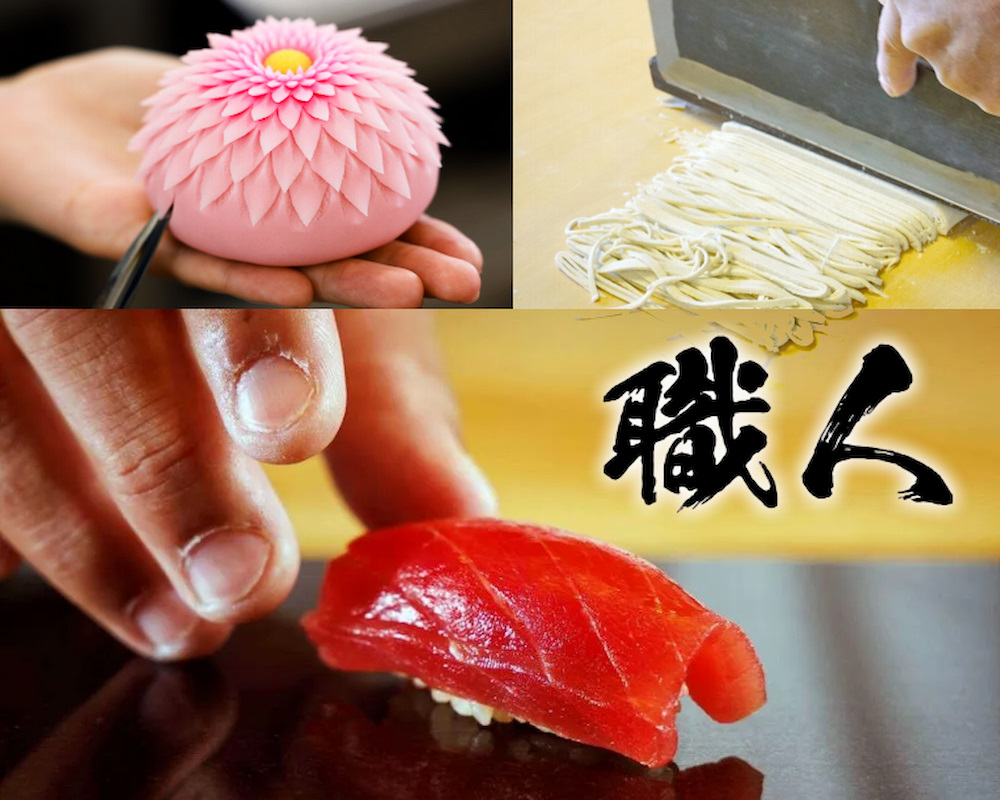
This is the second part of my series on Japanese craftsmen (artisans).
Last time, I introduced the “craftsmen of vessels“
This time, I’ll be introducing the “craftsmen of food (chefs)”
Food is essential to human life. More than just nutrition to build the body, it is something that colors and enriches our lives. And the craftsmen who handle food are, without a doubt, truly wonderful 😌
Food: A One-of-a-Kind Craft
As I mentioned in the previous article, Japan is full of craftsmen. Potters for tableware, dyers and weavers for clothing, carpenters for homes — all deeply tied to our daily needs of clothing, food, and shelter. Among them, food craftsmen have one unique and remarkable feature.
- Five Senses
The five senses are sight (eyes), hearing (ears), smell (nose), touch (body), and taste (mouth). Of these, only food engages taste — it’s truly one of a kind. Most other works of craftsmanship are experienced mainly through sight or touch. But dining draws deeply on taste, while also engaging smell, touch, and even hearing — through fragrance, texture, and the gentle sounds that accompany eating — making them inseparable elements of the experience.
Eating also means placing something directly into the body. In that sense, it carries a certain risk, which is why complete trust in the one who prepares the food — beyond the senses, with the heart — is essential. - Lifespan
The dishes created by craftsmen — works of art in themselves — are marked by their fleeting lifespan. A house built by a carpenter may last for decades, even centuries. Tableware or clothing can last for years. But food, where freshness is everything (especially in Japan, where raw dishes are common), often lasts only an instant — from the moment the ingredients are procured and prepared, to the moment they reach the diner’s mouth.
This brevity, almost ephemeral, feels akin to “the beauty of transience” found in cherry blossoms. - Time
Closely tied to its lifespan, food also demands a keen sense of time. That is why it’s vital to carefully read and seize the right moment — of the hour, the season, and the peak of freshness — without letting it slip away. At the same time, conditions such as the day’s weather, temperature, humidity, and even the physical state of the guest are constantly shifting. Within these ever-changing circumstances, the craftsman must choose the precise moment to serve each dish.
There may be nothing flashy or instantly recognizable to the eye, but it is here that the craftsman’s sensitivity, spirit, experience, and intuition quietly come into focus — revealed in the food itself. - Life
The food we eat each day exists within the great chain of life, sustained by both animals and plants as part of the wider natural world. If I may grumble a little, I feel that food today has become overly entertainment-focused — through competitive eating and spicy food challenges — which is somewhat disappointing.
By contrast, in Japan there is a word spoken (or at least thought) before every meal: itadakimasu. In it lies a solemn gratitude for life itself, a spirit once deeply held by the Japanese, though it has grown faint today. From the craftsmen, too, you can feel a quiet respect for the life within each ingredient.



The Craftsmen
From here, let me introduce some of the many craftsmen who work with food.
Sushi
When I say “craftsman,” does sushi come to mind first, or is it just me? Sushi craftsmen are masters of drawing out the pure flavor of fresh ingredients without dulling their essence.
They pay attention to everything — the temperature of the rice, the condition of the fish, the subtle pressure of the hand. In Edomae sushi, traditional methods like marinating or kelp curing are used, and long years of experience shine through in the way they age and prepare the fish. Into a single piece of sushi, they pour their five senses, their sense of beauty, and their spirit of hospitality.
It takes years of rigorous training to master the craft. Sushi is not only about flavor, but also about the movement, the heart, and the spirit behind it. Truly, it is the quintessential Japanese craftsmanship.
Soba
The sound of kneading soba, of slicing it, of slurping it — why is it that these sounds bring such calm to me as a Japanese person? Soba craftsmen are masters at drawing out flavor, aroma, and smooth mouthfeel from the simplest of ingredients: water and buckwheat flour.
Blending the flour, kneading, rolling, cutting, boiling — every step requires skill, and boiling is a short, decisive battle lasting only seconds. The ratio of flour to water change depending on the day’s temperature and humidity, so a craftsman’s sensitivity to the air itself is crucial.
At first glance it may seem plain, but every bowl carries sincerity and sensibility. With its sounds and scents, soba creates a space of stillness, like wabi-sabi itself.
And of course, Japan is also home to countless masters of udon and ramen.
Wagashi
Wagashi are so delicate in their beauty that you almost forget to eat them, simply gazing instead. Wagashi craftsmen are artists who capture the seasons and traditions in subtle colors and forms.
With limited ingredients such as nerikiri or gyuhi, they shape flowers, landscapes, and their own inner worlds. Each piece is handmade, with skill revealed in the wrapping of bean paste, the cutting of shapes, the coloring of the surface.
Wagashi are closely tied to the Japanese tea ceremony and the culture of gifts, soothing the heart with their gentle sweetness and refined beauty. Holding one feels as though a fragment of the seasons has fluttered down into your hands.
Miso
For many Japanese people, a sip of miso soup brings a wave of comfort and nostalgia, often stirring memories of home. Miso craftsmen are alchemists who transform the simplest of ingredients — soybeans, barley koji, and salt — transforming them into deep umami flavor through the quiet power of fermentation and time.
In the traditional method of wooden barrels, fermentation is nurtured alongside living microorganisms, deepening flavor over months or even years. It takes seasoned judgment and intuition to gauge temperature, humidity, and the progress of fermentation. The results differ by region, producing red miso, white miso, and other unique local flavors.
Miso is a taste rooted in the memories of Japanese homes and landscapes, and an indispensable element in dishes like the beloved miso ramen.
It is, in a way, the sibling of another taste of home — shoyu (soy sauce).
That was my introduction to some of the craftsmen of food.
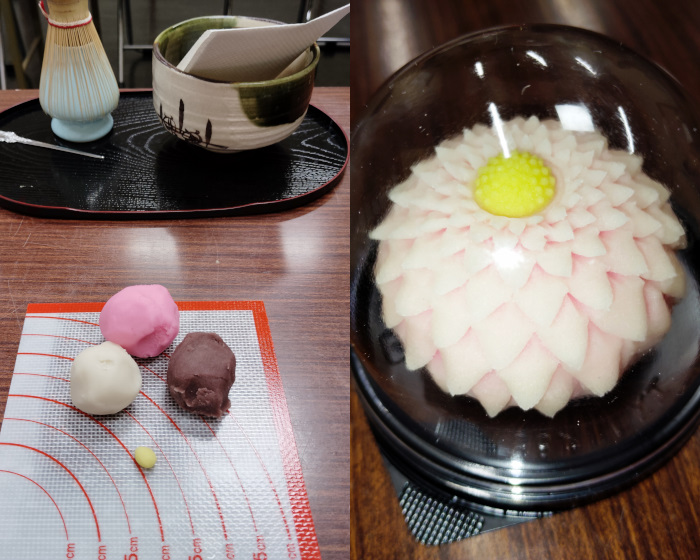
I’ve actually tried making two of the foods I introduced above: soba and wagashi. The wagashi workshop was just the other day — I even have photos. It was difficult, but once I started, I got so absorbed in the delicate work that I lost track of time. It was pure fun 😄 And through the experience, I could feel firsthand just how extraordinary the craftsmen’s skills truly are. (For the record, the photo on the right shows the teacher’s sample. Mine turned out too poorly to show 💧)
Washoku
Many of you may already know this from the news washoku — traditional Japanese cuisine — was registered as a UNESCO Intangible Cultural Heritage in 2013. What was recognized was not only its excellent nutritional balance, but also the philosophy at its core: respecting nature, sensing the seasons, connecting with the community, and serving with sincerity. The Japanese craftsmen who carry on this tradition are simply the best!
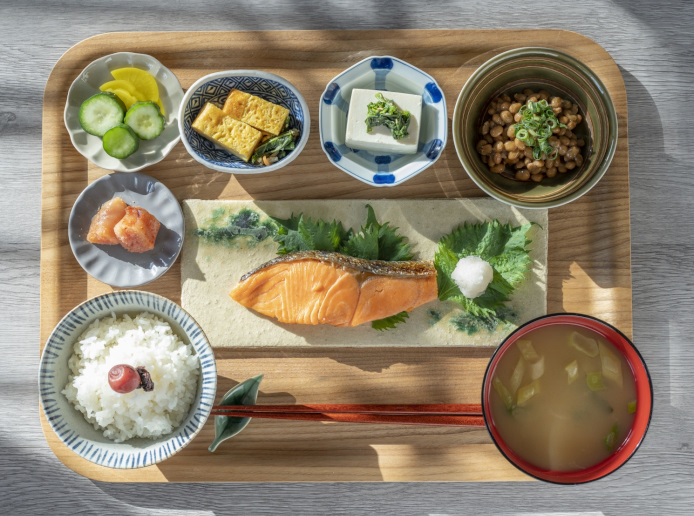
Rice balls and miso soup, sashimi, soba with the fragrance of dashi — these are the foods I always long for when I travel abroad. And when I return home and finally taste them again, I feel a deep sense of relief, and I’m moved once more by the warmth and quality of service in Japanese restaurants.