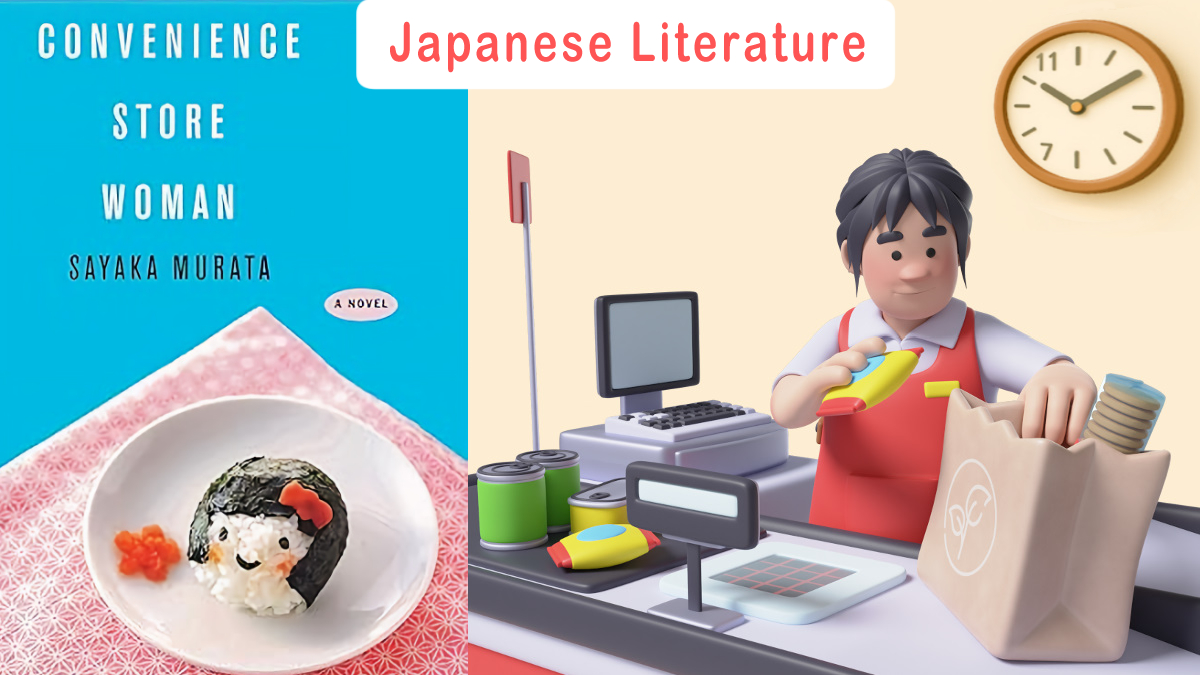
Today, I’d like to talk about Convenience Store Woman, a novel by Sayaka Murata that won Japan’s prestigious Akutagawa Prize in 2016.
The main character may seem unusual, even bizarre, by most standards. But as an introvert myself, I found so many parts of the story deeply relatable 😅
It was as if the book gave voice to things I had always felt but never knew how to say — especially that question I’ve been asking myself since I was little:
“What does it mean to be normal?”
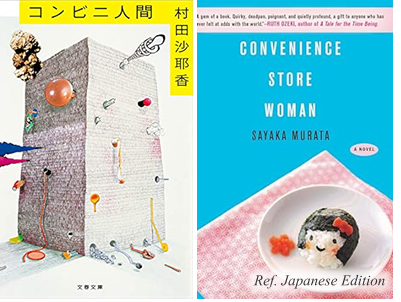
Words That Spoke to Me
Here are some quotes from the book that really stayed with me:
My parents and I were all worried. I grew up thinking, I have to be “cured.”
I couldn’t wait to get back to the convenience store. There, the most important thing was being part of the team. It wasn’t complicated. Gender, age, nationality — none of it mattered. Once we put on the uniform, we were all simply “store clerks” equal in every way.
In the morning, I’d become a clerk again, a cog in the machine of the world. That was the only thing that made me feel like a normal person.
Why a convenience store? Why not a regular job? I didn’t really know. There’s a perfect manual to become a clerk, but there’s no manual for how to be a “normal person” outside of it. I still had no idea how to do that.
Her life’s basically over. She’s hopeless, a burden to society. You know, people are supposed to belong — either to a job or to a family.
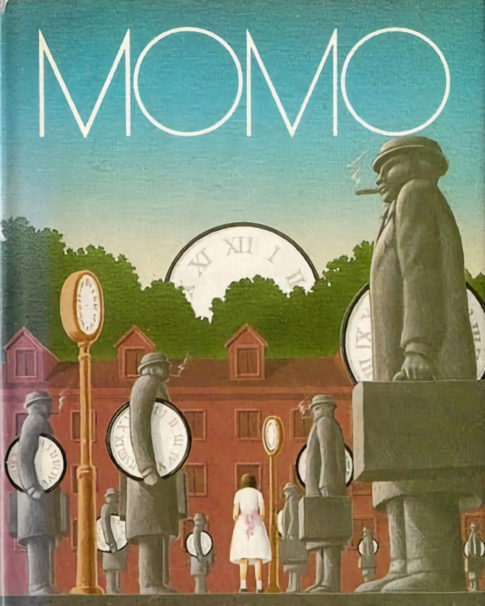
The so-called normal world is ruthless. Anything that doesn’t fit gets quietly erased. People who don’t conform are processed out of existence.
If you ask me, this world is broken. I’ve been treated unfairly because the world itself is flawed. It doesn’t accept those who don’t fit. I’ve suffered because of that for a long time.
Nothing’s really changed since the Jomon era. If you’re not useful to the village, you get pushed out.
※The Jomon era is a prehistoric period in Japan
People go on about “diversity” and “different ways of living,” but in the end, nothing’s changed since ancient times.
If you want to stay in the convenience store, you have to become a “clerk” It’s simple — wear the uniform, follow the manual.
If the world is a village stuck in the Jomon era, then even within that village, if you act the way the manual says, wearing the skin of a “normal person,” you won’t be kicked out or treated like an intruder.
You start erasing the parts of yourself that others find strange. Maybe that’s what it means to be “cured.”
A Convenience Store: A Microcosm of Japanese Society?
What did you think of the quotes I shared?
I believe many people — not just introverts or extroverts — might resonate with them, especially those who have ever felt suffocated or out of place in Japanese society, or in their own society, wherever that may be.
The protagonist of this novel is someone who is treated as an outsider — both at school and at home. But inside the convenience store, by following the manual, she is seen as “normal” and accepted by society. The store becomes her only safe space — where she can be herself with confidence, without worrying about how others see her.
Japanese society is often said to have strong peer pressure. To some extent, this may be necessary for maintaining order, and it exists in many countries. But in collectivist Asia — and especially in Japan, where harmony is deeply valued — this pressure can feel even stronger (at least in my experience😅). It’s a culture where reading the room, not causing disruption, and being the same as everyone else are highly prized.
There are many idioms that reflect this mindset, like:
“The nail that sticks out gets hammered down” or “If everyone crosses at the red light, it’s not scary”. We even have words like mura-hachibu (ostracism) and hosareru (being shut out from opportunities).
I think this novel uses the “convenience store” as a condensed symbol of this modern Japanese society — a society that, at its core, still resembles a tightly knit village, not so different from the Jomon era.
After all, it’s not just Japan — some say our brains haven’t changed much since tens of thousands of years ago, so maybe it’s only natural that our social instincts haven’t either…
The Double-Edged Sword of Conformity
But I don’t think peer pressure is always a bad thing. If we had none at all, people might just act however they want, and society could fall into chaos.
Sure, keeping order is part of what laws are for — but even laws have their limits. You can’t exactly write things like “don’t cut in line, just quietly join the end” or “take your trash home with you” into legislation 😅
These are the kinds of unspoken rules that help society run smoothly.
Peer pressure — and the teamwork that grows from it — helped Japan achieve remarkable growth after World War II. Even today, the Japanese habit of reading the room and being considerate of others has led to world-class service, high-quality products, and unique subcultures that we can be proud of.
That’s why, in the end, I think it all comes down to balance and intention. It’s not about blindly going along with everyone else — it’s about choosing when and how to go along, depending on the situation.
And especially for things like work, marriage, or one’s way of life, those choices should be made by the individual, and respected by others.
When it comes to teamwork — if everyone thinks the same way, and has the same strengths and weaknesses, there’s not much point in forming a team, is there? A team has value precisely because each member is different, bringing their own strengths to the table 🤔
“I was born” not “I gave birth”
So far, I’ve shared my thoughts through the lens of Japanese society.
what about the society you live in?
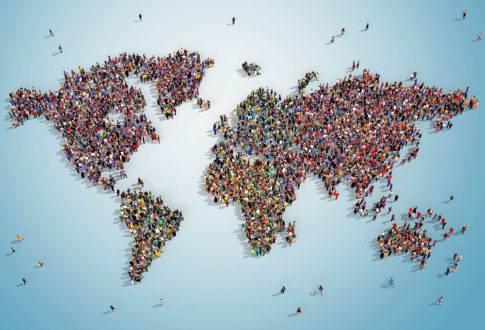
Everyone has their own way of thinking, and those views can differ widely depending on where they live — by region, culture, or country. You might find yourself agreeing with some parts, but feeling uneasy about others. That’s only natural.
Society is a collection of individuals, but it doesn’t prioritize any one person’s beliefs. It follows the values of the majority. So unfortunately, no society can ever fit any individual perfectly.
And none of us gets to choose the country we’re born in.
It’s a lottery — a gamble of chance.
The passive voice
— “I was born” —
says it all.
We don’t get to decide. We simply arrive. In that sense, we’re all working through a kind of fate — learning to live with the country we were given.
As we grow up, we learn more about the world. We travel, we read, and we discover how many different ways of life are out there. Sometimes we long for that difference — a feeling captured in the saying, “the grass is greener on the other side”.
And yet, if we were to actually live in another country, we might come to realize that our home still holds a special place in our hearts.
I may sound critical at times, but in the end — I really do love Japan. And because I love it, I want it to become even better.
A Brief History of Convenience Stores in Japan
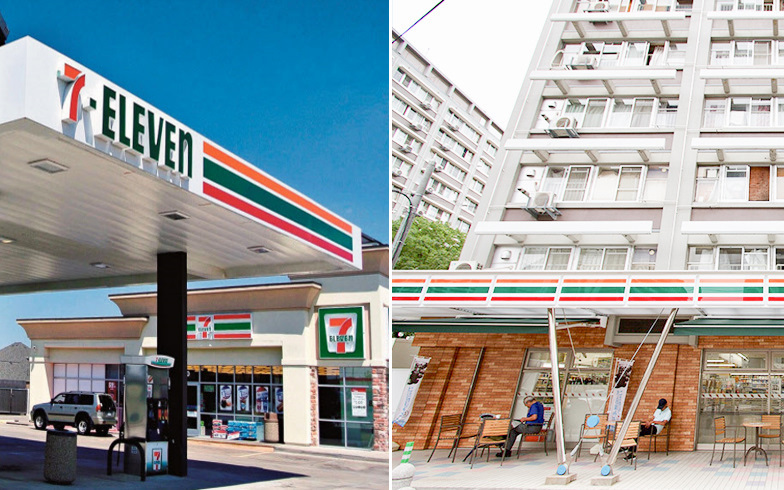
Locations: the U.S vs. Japan.
In the U.S.many are attached to gas stations?
In Japan, , on the other hand, convenience stores are often located in the middle of towns or just around the corner from home.
Now, changing the topic just a bit — I’d like to end by sharing a short history of convenience stores in Japan. Understanding the background of Japan’s konbini (convenience stores) — which play such a central role in this novel — might make the story even more meaningful.
1927
It all began in Texas, USA, with a company called Southland Ice, which sold ice. To better serve their customers, they started offering milk and bread as well.
1946
The company was renamed 7-Eleven, based on their long business hours: 7 a.m. to 11 p.m. At the time, this was considered incredibly generous and innovative.
1974
Japan’s first 7-Eleven opened in Toyosu, Tokyo. The franchise was introduced by Ito-Yokado, based on American expertise. Around the same time, other major chains like Lawson and FamilyMart also made their debut.
From there, Japan’s convenience stores evolved in a uniquely Japanese way and became an essential part of everyday life:
・Every clerk’s movements and speech were standardized with detailed manuals to ensure consistent service
・Opening hours expanded, eventually becoming 24/7
・Items like bento boxes and fresh produce, rarely seen in U.S. stores, became common
・They began offering services like bill payment and package pickup, becoming a kind of lifeline
・Advances in IT systems (like POS registers) and logistics enabled ultra-efficient, responsive service
2005
Japan’s Seven & i Holdings, the operator of 7-Eleven in Japan, acquired the struggling U.S. 7-Eleven and turned it into a subsidiary. It was like the child — Japan — reaching back to save the parent — America — where it all began.
█ ▇ ▆ ▅ ▃ ▁
And that’s the story!
These days, Japanese convenience stores are facing their own challenges, but I believe they’ll continue to stay close to us — not just as places to grab a snack, but as dependable companions built into the machinery of everyday life.